Should this destination stay on your shortlist?
Worth adding as the most practical US ski benchmark. More investable than Aspen, but not cheap.
The verdict
The verdict is selectively positive. Park City / Deer Valley suits an active eligible buyer who values a familiar title framework, Salt Lake City airport access, four-season recreation and a deeper resale market than most small ski towns. Utah restricted-entity eligibility still requires legal review. It works best when the home has a credible year-round use case, the buyer can absorb high carrying costs without optimistic rent, and the exact zoning and HOA permit the intended operation. Old Town is strongest for a walkable mountain-town life; Park Meadows and Prospector are more residential; Lower Deer Valley offers resort proximity; Canyons Village is operationally convenient but contract- and fee-heavy.
Foreign ownership does not create U.S. immigration status, tax residence or healthcare coverage. A nonresident seller can face FIRPTA withholding, and U.S. real estate can be a U.S.-situated asset for nonresident estate-tax purposes. Those exposures are material at Park City price points and require cross-border tax and estate advice before choosing an ownership structure. The local regulatory question is equally specific: Park City and unincorporated Summit County have different nightly-rental licensing processes, zoning controls and management requirements, while an HOA or resort agreement may be stricter than government rules.
Proceed in order. Establish the immigration, health-insurance, financing, tax and estate framework; choose the daily-life pattern; travel the airport, hospital, grocery and ski routes in a storm and peak traffic; then verify title, survey, zoning, HOA, rental permissions, building condition, snow systems, wildfire exposure and insurance. Read every recurring charge and special-assessment risk. Finally, identify the next buyer and model a slow exit. Park City can be unusually practical for a mountain market, but no amount of access rescues an overpaid property with unclear use or escalating operations.
Park City / Deer Valley through five destination lenses
The five paired lenses below translate the Atlas scores into choices between Park City's historic core, Deer Valley, Canyons Village and the residential basin. The full ten-factor assessment appears once in the score table.
Live well when the lifts are not the plan
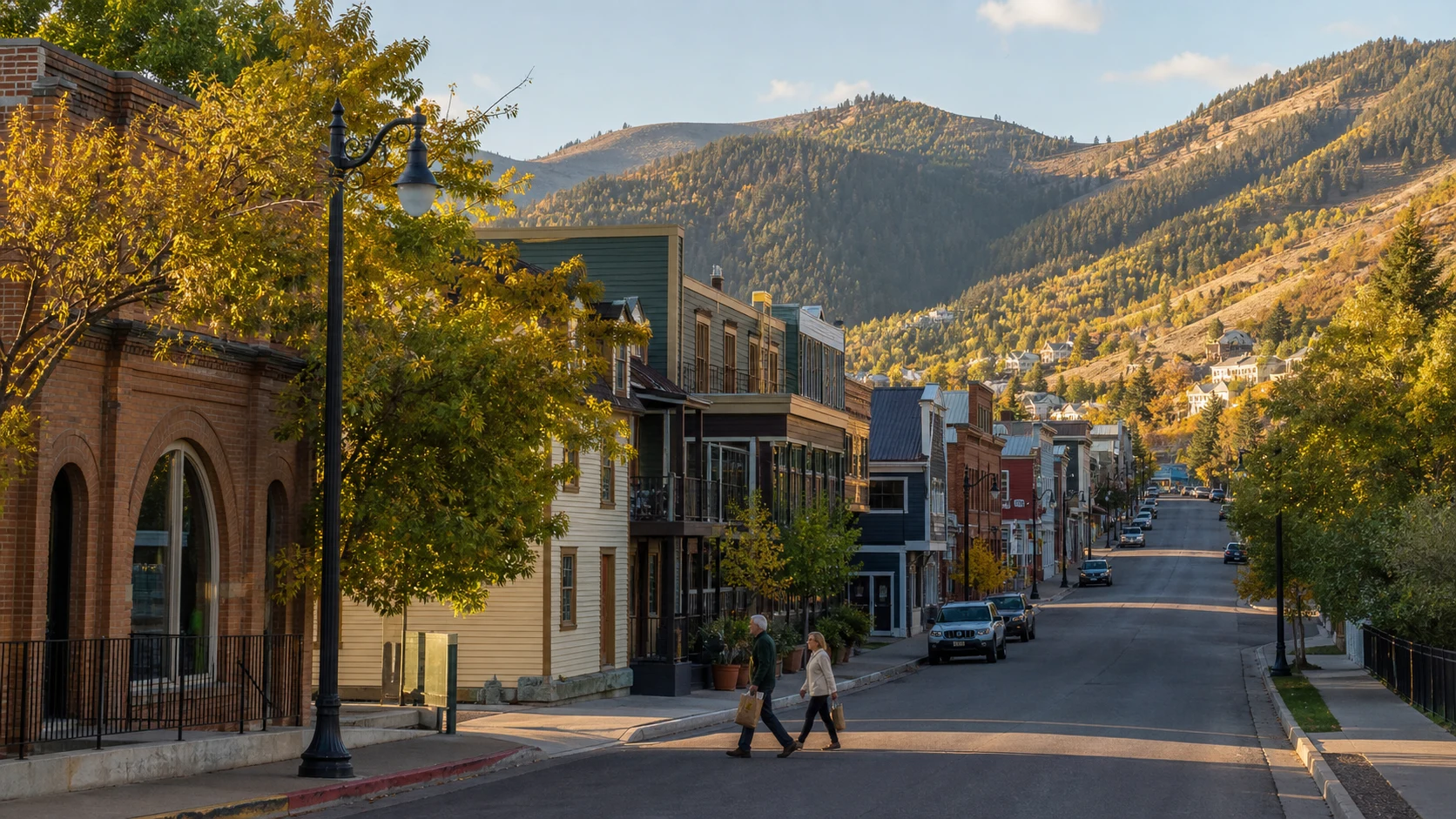
Park City's strongest argument is that it functions beyond skiing. Old Town combines Main Street, restaurants, cultural venues, trails and Park City Mountain access in a compact historic setting. Park Meadows provides larger residential lots and a quieter daily rhythm close to the core. Prospector has apartments, groceries, restaurants, clinics and transit at a more approachable entry point. Kimball Junction has the broadest concentration of everyday retail and services, though it feels suburban rather than like the mining town. Canyons Village and Deer Valley offer polished resort amenities, but ordinary errands often happen elsewhere. Test which environment still feels useful in May and October.
Retirement practicality is credible but not urban. Park City Hospital at Round Valley provides emergency and trauma care, imaging and multiple specialties, while more complex treatment can require travel to the Salt Lake Valley. Confirm the correct provider network, ambulance route and insurance terms rather than relying on distance alone. Elevation, dry air, winter ice and smoke can affect health and mobility. A steep Old Town staircase, snow-covered Deer Valley drive or multi-level Canyons townhouse may become difficult after an injury. Prioritize a flat entrance, main-level bedroom, reliable heating, air conditioning or filtration and a realistic plan for driving less.
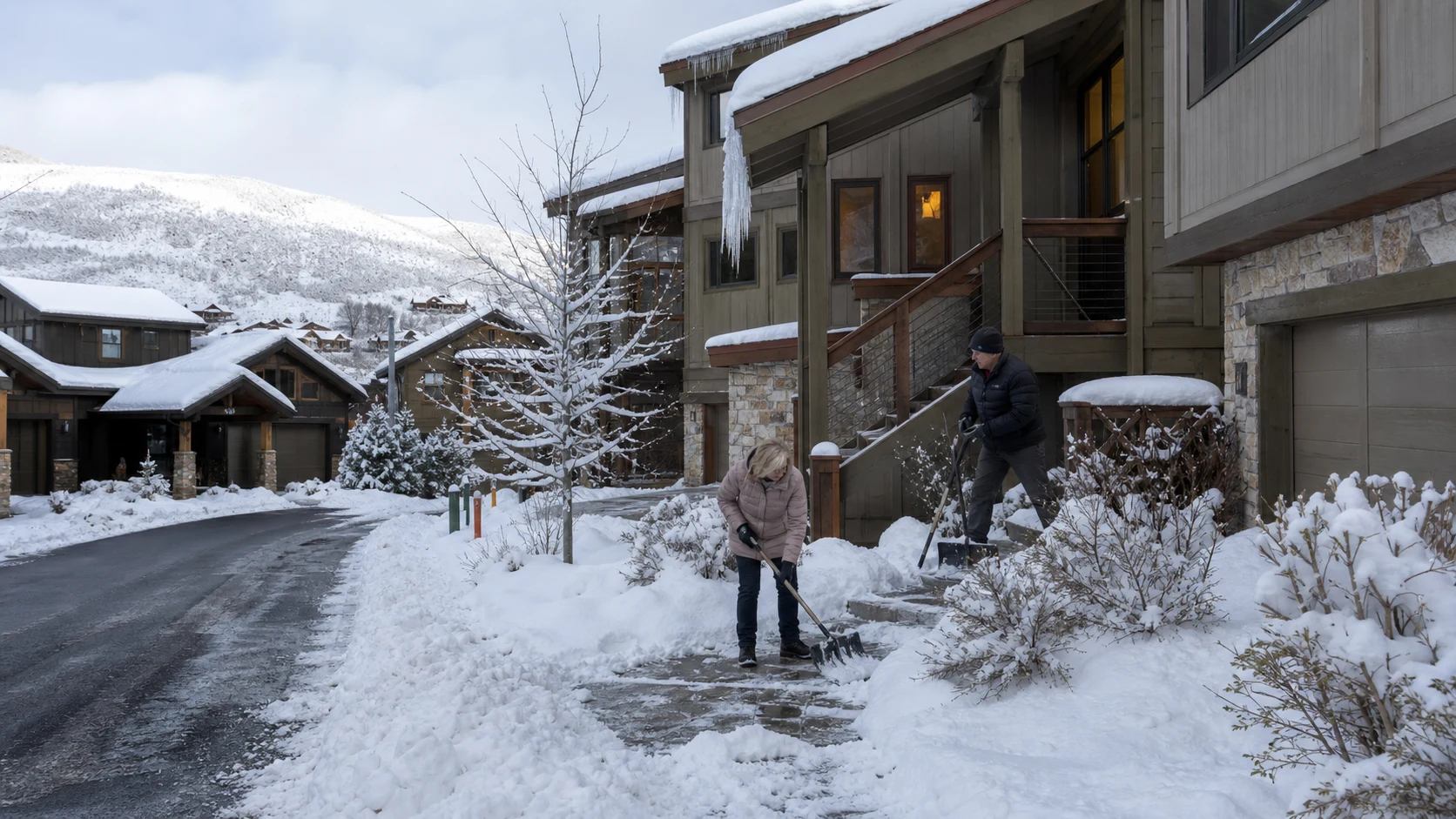
The year-round social question is address-specific. Old Town stays animated but can be noisy and visitor-led. Prospector and Park Meadows feel more resident-based. Lower Deer Valley sits close to town; Upper Deer Valley and some gated communities can be quiet outside occupancy peaks. Snyderville Basin connects to schools, shops and trails but spreads daily life across roads. Spend ordinary weeks in the least flattering season, shop for groceries, attend appointments and return after dark. Ask who clears the drive and exterior stairs, and whether the household can reach food, care and company if one person cannot ski, drive or manage snow.
Use the airport advantage without ignoring the canyon
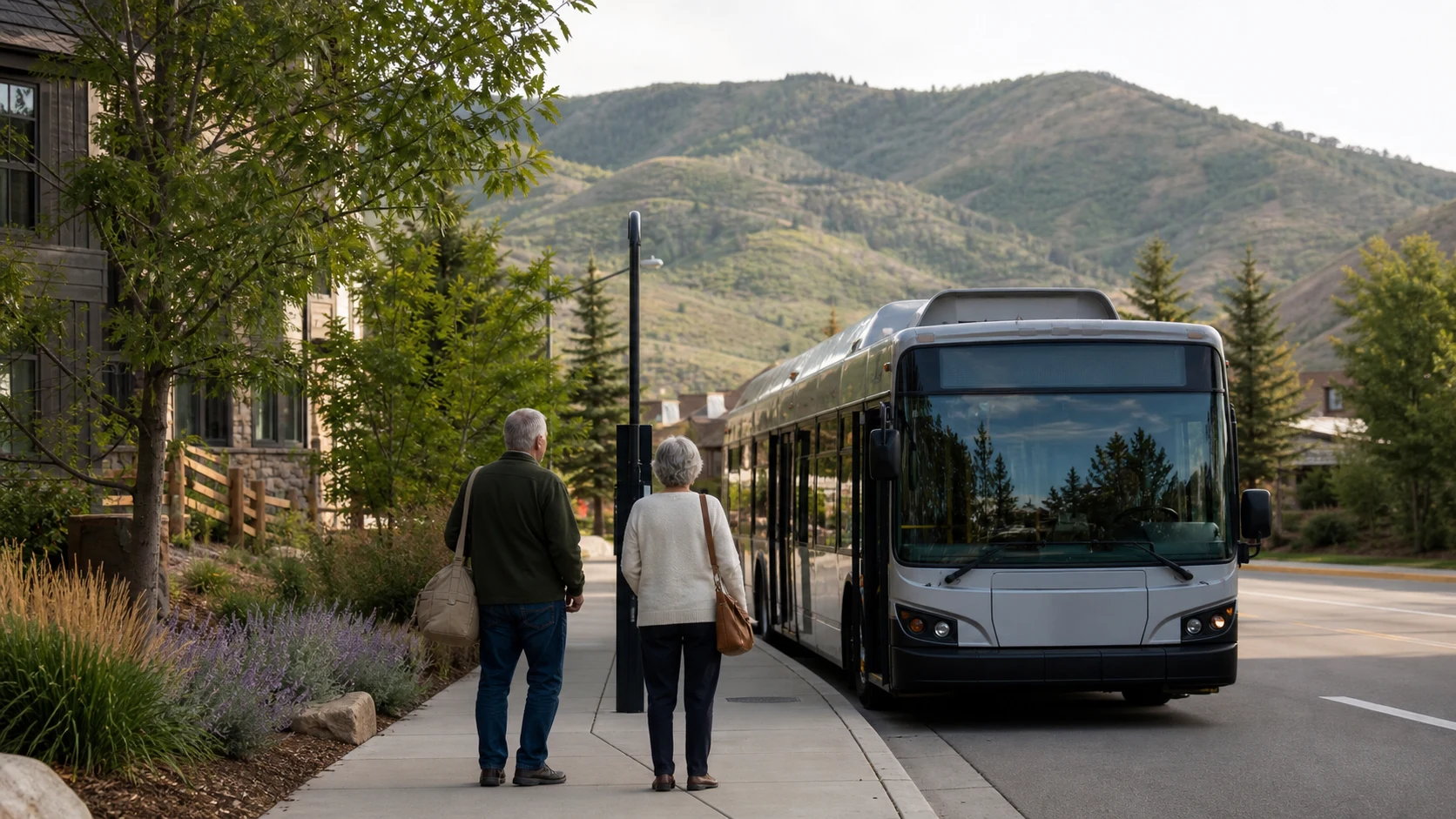
Salt Lake City International Airport is a structural advantage, but the final journey still depends on weather and congestion. Park City is commonly reached through Interstate 80, with Kimball Junction encountered before the historic core. Old Town, Deer Valley and Canyons Village each add different local traffic patterns. Current regional commuter service links Park City and Salt Lake City, while Park City Transit provides fare-free local routes across core neighbourhoods and resort bases. Timetables, transfers and seasonal service must be checked for the exact address. A quoted drive time is not the same as a dependable winter door-to-door journey with luggage.
Internal access determines whether a car is optional. Old Town can be genuinely walkable if the home is near Main Street and the Town Lift, but steep streets and winter conditions narrow that advantage. Lower Deer Valley connects readily to the core; Upper Deer Valley and gated hillside homes are more vehicle- or shuttle-dependent. Canyons Village can support a resort stay without a car, yet groceries, hospital visits and wider town life add transfers. Prospector benefits from transit and nearby services. Park Meadows and much of Snyderville Basin are more comfortable with a vehicle. Test routes at commuter and ski peaks, not on a quiet summer afternoon.
Foreigner fit is strong in professional access and weak in automatic simplicity. Park City has agents, lawyers, accountants, managers and resort staff accustomed to international owners. Yet U.S. immigration, federal and state tax, beneficial ownership, estate exposure, banking and insurance can become more complex for a nonresident. HOA documents, title exceptions, inspection reports and nightly-rental agreements are long and consequential even when written in English. Appoint independent counsel rather than relying on the seller's team, and give a trusted local representative authority to receive notices and inspect the home. A familiar legal language does not remove cross-border consequences.
Own freely, then prove the address and use
Many individual foreign buyers can acquire ordinary Utah residential real estate, but Utah's Restrictions on Foreign Acquisitions of Land Act restricts defined restricted foreign entities. Buyer nationality, control, entity structure, the land and timing therefore require current Utah legal review. The closing still needs exact diligence: title commitment and exceptions, survey, access, easements, water and sewer status, permits, certificate history, property tax, disclosures, inspection and insurance. Condominiums and resort residences add declarations, bylaws, budgets, reserves, insurance allocation, litigation, rental-management terms and transfer fees. Old Town can bring preservation constraints; newer Canyons or East Village product can bring construction and completion risk. Freehold title is not a substitute for reading the governing package.
Nightly rentals are a location-and-building privilege, not a general Park City right. Park City requires a licence for stays under 30 days where zoning allows, along with an inspection and state tax handling. Unincorporated Summit County separately licenses both the owner and the manager for rentals under 30 days. HOA, condominium hotel, resort and lender rules may be tighter. Confirm the municipal boundary first, then obtain written zoning and lawful-use confirmation alongside licence history, inspection, occupancy, parking, local-contact and tax duties. Never rely on a portal calendar or a listing's phrase ‘nightly rentals allowed.’
Mountain risk is layered. Park City's building guidance addresses Wildland Urban Interface requirements, snow load, soil conditions and permits. Wildfire exposure can raise insurance cost or reduce availability, especially near wooded slopes; winter adds roof shedding, freeze, ice dam, blocked access and power interruption. Localised drainage and flood questions still matter around creeks and lower sites. Obtain current hazard maps, a specialist inspection and an insurance binder for the exact intended use before the contingency period expires. Ask about roof heat, snow retention, driveway grade, defensible space, air filtration and loss history. A resort-managed building can transfer tasks, but it cannot transfer all risk.
Treat nightly rent as a regulated operation
Park City can produce strong peak revenue, but the gross figure is far from rental profit. Winter holidays, summer recreation and major events support demand, yet occupancy and nightly rate vary by property, access and calendar. Old Town can combine walkability with visitor demand. Lower Deer Valley benefits from resort proximity; Canyons Village offers managed product and amenities; Prospector may enter at a lower price but competes in a different guest segment. Deduct management, housekeeping, platform fees, utilities, hot tub, snow, repairs, insurance, tax, HOA, resort charges, furniture replacement and owner blocks before comparing yield with a long-term tenancy or no rental.
Operations need documentary evidence. Obtain trailing property-level statements, bank deposits, tax filings, manager invoices and the exact future contract. Reconcile the rentable bedroom count and occupancy with permits and HOA rules. Ask whether the licence follows the owner, the premises or neither after transfer. Confirm response-time obligations and who manages a heating failure during a storm. At Canyons Village, a high monthly HOA may fund useful services but can materially compress net income. In Deer Valley, shuttle or club access may depend on separate terms. Model a poor-snow year, weaker event calendar and higher insurance premium rather than capitalising one exceptional winter.
Capital upside is credible but segmented. The Park City Board of REALTORS reported a firm Q1 2026 single-family median in Park City proper, a very different Canyons condo median and strong trailing activity in Lower Deer Valley. Those figures show market depth, not guaranteed appreciation. Deer Valley East Village and Jordanelle introduce major new supply and amenities while also changing traffic, construction and future competition. Established Old Town scarcity is different from a new managed residence; Park Meadows is different again. Buy utility and durable access, not a development announcement. Run a flat-price exit after all transaction and carrying costs and require the personal-use case to survive it.
Pay for a buyer pool you can reach again
Value entry is relative at Park City prices. A Prospector studio can offer the lowest capital and easier daily services, but size, HOA, building condition and permitted use define the bargain. Old Town commands a walkability and scarcity premium, often in old or heavily rebuilt structures. Lower and Upper Deer Valley price resort access and service. Canyons Village spans modest hotel-style units to luxury residences, with recurring charges and management agreements central to value. Park Meadows provides residential utility; Kimball Junction and Snyderville Basin can offer space and highway access without the same historic or ski premium. Compare like format, boundary and use.
The official market evidence below is deliberately bounded. Park City proper's Q1 2026 single-family median comes from 26 sales. Canyons Village's condo median comes from 26 sales and a changing mix. Lower Deer Valley's $2.85 million figure covers 53 trailing-12-month condo sales, not one quarter. None values the three asking observations. Match completed sale, property type, legal area, age, renovation, furnishings, parking, view, ski access, HOA and rental rights. Commission an inspection and appraisal where useful. An asking price per square metre can be distorted by outdoor area, hotel services or an unusually small unit.
Exit liquidity is better than in many specialist ski towns because the airport, U.S. buyer base and variety of product create multiple demand channels. It is still not uniform. A practical Prospector or Park Meadows home can reach residents and second-home buyers. A well-run Canyons unit depends on building reputation, fees and rental evidence. A Deer Valley estate needs a much smaller high-net-worth pool. New East Village supply may compete with existing stock. Before purchase, ask two agents who did not source the property who would buy it next, typical marketing time and the discount needed to clear. Model a long sale and preserve cash reserves.
The Atlas assessment
Here’s how Park City / Deer Valley scores on the ten factors that matter most when choosing a long-term home abroad.
| Dimension | Score | Weight | Atlas read |
|---|---|---|---|
| Lifestyle magnetism | 4.3/5 | 10% | Old Town combines culture, dining and trails; Deer Valley and Canyons add polished recreation with more resort dependence. |
| Global access | 4.3/5 | 10% | Park City benefits from Salt Lake City airport access, while storms and Interstate 80 traffic still affect the final journey. |
| Ownership clarity | 5.0/5 | 12% | Many foreign individuals can acquire Park City homes, but Utah restricted foreign entities, title, HOA and cross-border tax require review. |
| Regulatory safety | 3.0/5 | 8% | Park City and Summit County use different nightly-rental licences, with zoning, inspections and HOA limits layered above them. |
| Rental profit | 3.5/5 | 13% | Old Town, Deer Valley and Canyons can earn strong peaks, but management, HOA, snow, tax and insurance compress net results. |
| Capital upside | 3.5/5 | 9% | Park City scarcity and Deer Valley expansion support selected assets, while Jordanelle supply and product mix prevent blanket appreciation claims. |
| Retirement fit | 4.0/5 | 11% | Park City Hospital and local transit support retirement, but elevation, ice, stairs and specialist-care travel require planning. |
| Exit liquidity | 4.0/5 | 9% | Prospector and Park Meadows reach broader buyers than a high-fee Canyons residence or ultra-prime Deer Valley estate. |
| Foreigner fit | 4.5/5 | 7% | Park City has international-owner advisers, while FIRPTA, estate tax, immigration, banking and insurance still demand independent coordination. |
| Value entry | 2.2/5 | 11% | Prospector and Kimball Junction can enter below Old Town or Deer Valley, but HOA, access and lawful use change value. |
Weighted assessment: 3.8/5. Reviewed 2026-08-23. Read the scoring methodology.
Representative property evidence
Three current asking observations show a Prospector studio, a Canyons Village townhouse and a Lower Deer Valley home. USD is both local and comparison currency; each area figure is converted from the listing's stated square feet.
| Observation | Type | Asking price | USD comparison | Area / basis | USD/m² | Source / captured | Confidence | What it represents |
|---|---|---|---|---|---|---|---|---|
| Prospector Carriage House studio | Studio condominium | 375,000 USD | $375,000 | 45.5 m² Portal/MLS-stated 490 sq ft field, converted at 0.092903 m2 per sq ft; the source does not independently prove measured internal or legal area. | $8,238/m² | Park City Real Estate / PCMLS 2026-08-23 | Medium | Active direct MLS observation for a furnished 490 sq ft Prospector studio; the portal shows a $430 monthly HOA. Verify title, area, HOA documents, condition, lawful rental use and completed value independently. |
| Canyons Fairway Springs townhouse | Townhouse | 2,500,000 USD | $2,500,000 | 170.5 m² Portal/MLS Fin. Sq. Ft. field of 1,835 sq ft, converted at 0.092903 m2 per sq ft; the source does not independently prove measured internal or legal area. | $14,665/m² | Park City Real Estate / PCMLS 2026-08-23 | Medium | Active direct MLS observation for a furnished 1,835 finished-sq-ft Canyons Village townhouse; the portal shows a $3,818 quarterly HOA and a one-day nightly-rental field. That field is not proof of a transferable licence or HOA permission. Verify all charges, use rights, area, condition and completed value. |
| Lower Deer Valley Hidden Oaks home | Detached home | 4,900,000 USD | $4,900,000 | 605.6 m² Portal/MLS Fin. Sq. Ft. field of 6,519 sq ft, converted at 0.092903 m2 per sq ft; the portal separately states a 969 sq ft garage. Verify composition against plans and title. | $8,091/m² | Park City Real Estate / PCMLS 2026-08-23 | Medium | Active direct MLS observation for a 6,519 finished-sq-ft Lower Deer Valley home; the portal shows a $500 annual HOA, change-of-ownership fee and long-term-rental field. Verify area composition, title, condition, shuttle and rental terms, all charges and completed value. |
Asking-price evidence only. Global Home Atlas has not verified availability, title, legal use, building condition, negotiability, fees or completed transaction value.
Official market anchors
These are public market signals—not valuations. They cover different property types, areas and periods; reconcile every candidate for exact location, legal area, age, condition, HOA, permitted use and completed comparable evidence.
- Park City proper single-family homes
- $4.016 million Q1 2026 median across 26 sales in MLS Areas 1–9; a broad city-limits signal, not an Old Town or Deer Valley valuation.
- Park City Board of REALTORS Q1 2026
- Canyons Village condominiums
- $1.34 million Q1 2026 median across 26 sales generating $48.1 million; the Board cautions that product mix affected the year-on-year change.
- Park City Board of REALTORS Q1 2026
- Lower Deer Valley condominiums
- $2.85 million Trailing 12-month median across 53 sales, not a Q1-only figure; use period and property type before comparing a candidate.
- Park City Board of REALTORS Q1 2026
Acquisition Costs
| Property price | $820,000 |
|---|---|
| Property price evidence | proxy |
| Acquisition costs | $45; known-base/incomplete |
| Effective rate | 0.0%; known-base/incomplete |
| All-in acquisition capital | $820,045; known-base/incomplete |
| Purchase route | Available: Direct foreign natural-person purchase, subject to restricted-foreign-entity screening |
| Acquisition benchmark | Calculable |
| Acquisition evidence | medium |
Known-base/incomplete; 5 unquantified conditional items remain outside comparable totals.
Base cost breakdown
| Component | Category | Amount |
|---|---|---|
| Summit County standard deed recording | registration | $45 |
Conditional items outside the base total
- Additional legal-description recording charges — USD2 for each description after the first ten, only if the deed exceeds the standard allowance. Amount: Not quantified.
- Title, escrow and closing services — Provider charges and buyer/seller allocation depend on the purchase contract, title condition and chosen settlement services. Amount: Not quantified.
- Buyer-broker compensation — Only if the buyer retains a broker and owes compensation not covered by an agreed seller or listing-broker contribution. Amount: Not quantified.
- Restricted-foreign-entity compliance review — Identity and control review where facts could bring the buyer within Utah's defined restricted-foreign-entity class. Amount: Not quantified.
- HOA, resort or private change-of-ownership charge — Only for a selected property whose governing documents impose a transfer, change-of-ownership or resort association charge. Amount: Not quantified.
Route basis: Utah's current land-acquisition prohibition applies to a defined restricted foreign entity, not every nonresident foreign natural person. The generic baseline is not assumed to be within that defined class, but identity, control and sanctions screening remain transaction-specific.
Jurisdiction basis: Park City and Deer Valley in Summit County, Utah, are the representative jurisdiction. Summit County's current recorder schedule charges USD45 for a standard recorded document, matching the current Utah Code USD40 instrument fee plus USD5 applicable to a third-class county. A 2019 official legislative study expressly reported no Utah real-estate transfer tax; a current Utah Code survey and the current county fee schedule identify no later separate transfer-tax charge, which is disclosed as a negative current-law inference rather than an affirmative statutory exemption. The benchmark property price is USD1,400,000.
Buyer scenario: Nonresident individual · second home · cash · resale · no reliefs
Reviewed: 2026-08-19
Sources
- Summit County Recorder/Surveyor - fee schedule
- Utah Code section 17-71-407 - recorder fees
- Utah Legislature - Tax Restructuring and Equalization Task Force research
- Utah Legislature - current Utah Code by title, chapter and section
- Utah Code Title 63L Chapter 13 - Restrictions on Foreign Acquisitions of Land Act
- Utah Division of Real Estate - state-approved Real Estate Purchase Contract
Where to look
Park City / Deer Valley is a set of operating patterns, not one price band. These groupings are orientation aids rather than valuation zones. Verify the municipal boundary, exact HOA, nightly-rental map, transit, snow access, insurance and completed evidence for every address.
Salt Lake City to the historic core
- Salt Lake City AirportInternational gateway
- Kimball JunctionHighway and service hub
- Canyons VillageWestern resort base
- Old TownHistoric walkable core
Core to Deer Valley and Jordanelle
- Prospector / Park MeadowsResidential daily life
- Lower Deer ValleyTown-adjacent resort area
- Upper Deer ValleyMid-mountain resort area
- East Village / JordanelleExpansion and new supply
| Micro-location | Best for | Daily life | Primary diligence |
|---|---|---|---|
| Old Town / Park City core | Walkability and mountain-town life | Compact, steep and visitor-active | Historic rules, parking, noise, snow and rental zoning |
| Lower / Upper Deer Valley | Resort service and ski proximity | Premium and increasingly car or shuttle-led | HOA, shuttle, slope, snow, insurance and resale pool |
| Canyons Village / Snyderville Basin | Managed resort access and highway connection | Resort core within a broader suburban basin | Fees, manager, zoning, construction and product competition |
| Park Meadows / Prospector / Kimball Junction | Year-round resident practicality | Services, transit and ordinary errands | Exact walkability, building condition, traffic and HOA |
Buyer checklist—in decision order
- Confirm immigration, healthcare, tax residence and cross-border estate structure.
- Choose Old Town, Deer Valley, Canyons or the residential basin first.
- Travel airport, hospital, grocery and resort routes in snow and peak traffic.
- Verify title, survey, permits, municipal boundary, zoning and historic controls.
- Read HOA, reserves, insurance, litigation, management and special-assessment evidence.
- Inspect structure, roof, snow systems, freeze protection, wildfire and drainage exposure.
- Clear nightly-rental licence, inspection, tax, occupancy and local-manager duties in writing.
- Model five-year cash outlay and identify the future resale buyer before signing.
For the national residence, tax and ownership framework, read about buying property in United States and retiring in United States. To size the plan, use the retirement abroad calculator. Compare directly with Miami / Fort Lauderdale, Los Angeles / Orange County and Lake Tahoe, or open the full Atlas.
References and update policy
Legal, tax, licensing, market, transport, healthcare, hazard and listing claims were reviewed on 23 August 2026. Recheck every time-sensitive source no later than 23 February 2027 and immediately after any tax, zoning, HOA, licensing, transport, hazard, insurance, market data or listing change. Obtain current U.S. and Utah legal, immigration, tax, estate, title, building and insurance advice for the exact buyer and property. Listings are dated asking observations, not valuations or availability guarantees.
- United States property guide
- U.S. Department of State: visitor visa
- IRS: FIRPTA withholding
- IRS: nonresident rental income from U.S. real property
- IRS: nonresident estates with U.S. assets
- Utah Legislature: Restrictions on Foreign Acquisitions of Land Act
- Park City: nightly-rental licence and inspection
- Park City: current planning resources
- Summit County: owner and manager nightly-rental licensing
- Park City: Wildland Urban Interface code
- Park City: building, snow, soil and permit resources
- Park City: community code compliance
- Park City Transit: current fare-free local service
- Park City Transit: 2026 routes and Park City–Salt Lake City commuter service
- Salt Lake City International Airport: ground transportation
- Park City Hospital: emergency and trauma care
- Park City Hospital: current medical services
- Park City Board of REALTORS: Q1 2026 market report
- PCMLS: Prospector Carriage House studio asking observation
- PCMLS: Canyons Fairway Springs townhouse asking observation
- PCMLS: Lower Deer Valley Hidden Oaks home asking observation