Should this destination stay on your shortlist?
Keep as a comparison-only global-city benchmark unless the buyer is eligible and the exact new dwelling has a clear approval pathway.
The verdict
The verdict is comparison-worthy but eligibility-led. Australia’s May 2026 foreign-investment policy says the temporary ban on foreign purchases of established dwellings runs from 1 April 2025 to 30 June 2029, with limited exceptions tied principally to housing supply. Foreign persons generally need approval before acquiring residential land. New dwellings remain the practical route, but a sales label such as ‘brand new’, ‘off the plan’ or ‘nomination sale’ does not prove that the exact buyer and unit qualify. Obtain written Australian foreign-investment advice and approval before signing or paying a non-refundable amount.
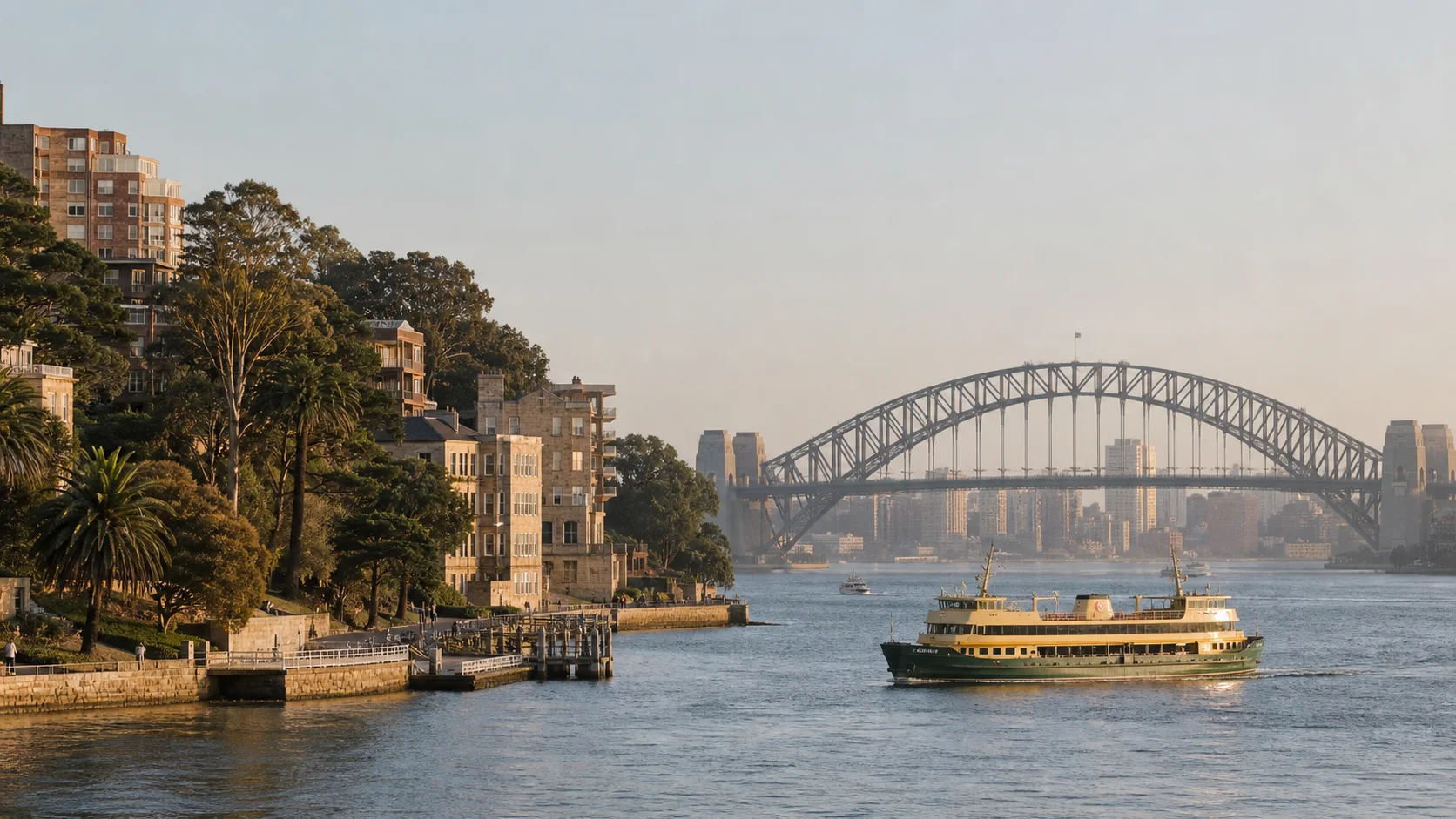
If the route is clear, Sydney offers the stronger harbour setting, international identity and high-value eastern and northern catchments; Melbourne offers a denser tram-and-culture pattern and, in many apartment submarkets, a lower absolute entry point. Both can support excellent long-term daily life. Neither should be treated as a generic retirement visa, effortless short-stay investment or simple two-city price trade. Immigration and Medicare eligibility are separate from title. New-build risk, state foreign-purchaser surcharges, annual owner taxes, strata governance and local rental rules can change the economic result more than a headline city median.
Proceed in order: establish immigration and healthcare; confirm the buyer and exact dwelling qualify; compare state duty and ongoing tax; test the neighbourhood without a car; investigate the developer, contract, completion protections and owners corporation; then underwrite long-term rent and resale without assuming short-stay income. The right purchase is a legally eligible, completed or completion-secure apartment in a district that works every week—not an interchangeable exposure to an Australian city name.
Five questions that decide Sydney or Melbourne
Five questions turn the Sydney-versus-Melbourne idea into a buyer decision: where ordinary life works, how the international journey ends, whether the exact new dwelling qualifies, what remains after full costs, and who can buy on exit.
Choose the weekly life, not the skyline
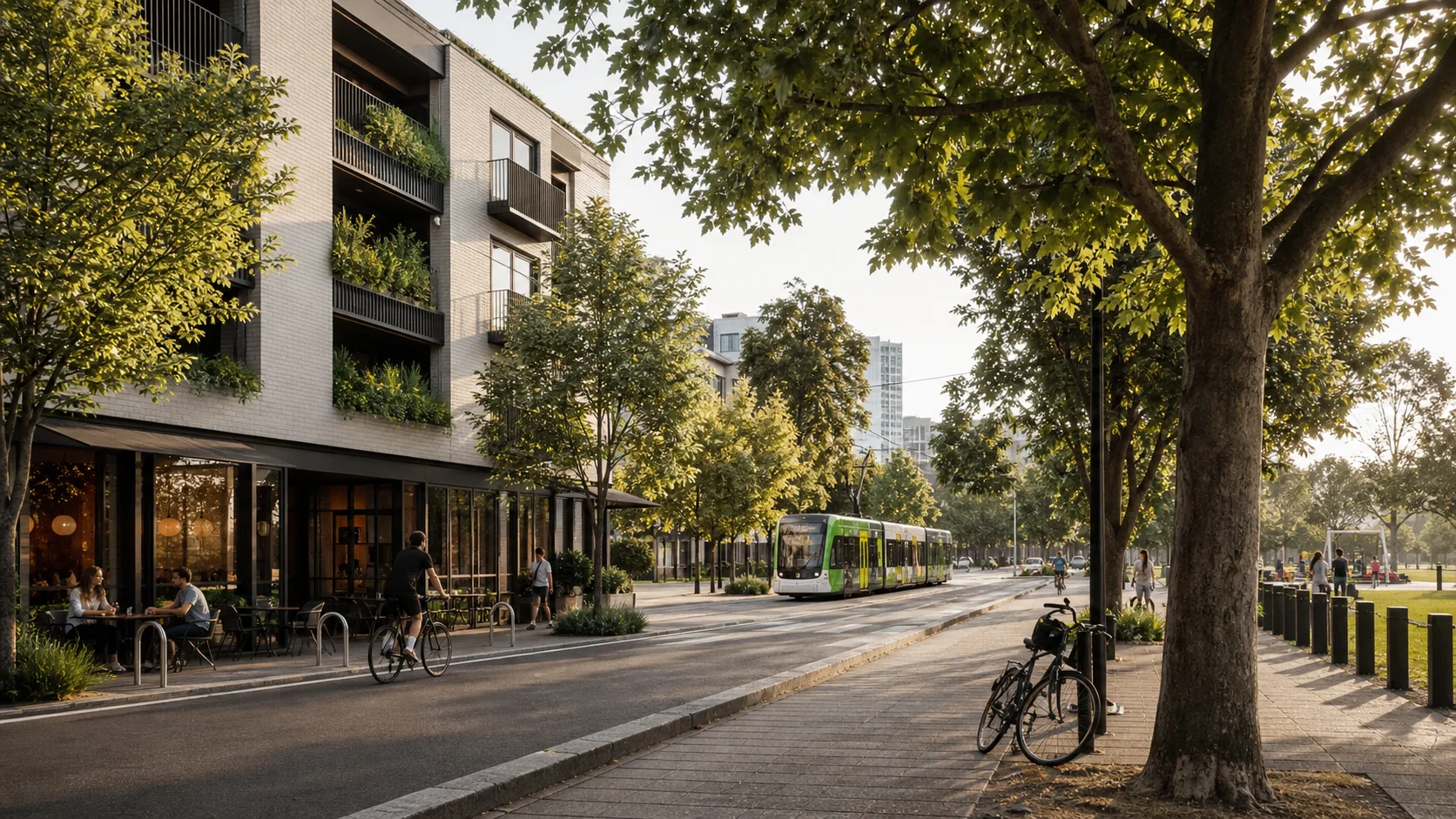
Sydney’s strongest daily-life patterns sit in distinct catchments. The Lower North Shore can combine rail, harbour access and major hospitals; the eastern suburbs combine beaches, culture and specialist care at a high price; inner-west and selected metro-served centres broaden the entry range. Melbourne’s inner south and east offer trams, parks, hospitals and established high streets, while Southbank and Docklands trade immediate city access for larger-building governance and a more vertical routine. Visit the exact neighbourhood on an ordinary weekday, after rain and after dark.
Retirement fit depends on gradients, heat, lifts, healthcare journeys and social routine. Sydney can be steep and bus- or ferry-dependent outside rail corridors; Melbourne’s tram grid is useful but not every platform or older stop is equally accessible. In any apartment, test step-free access from street to home, backup lift arrangements, cooling, cross-ventilation, noise and the route to groceries and a hospital. These cities score highly for services; an isolated tower, steep harbour address or car-led fringe can still be a poor long-term home.
Measure the whole international arrival
Sydney and Melbourne both provide deep international air networks, but the last mile separates addresses. Sydney Airport has rail access to the city and suburban network; Melbourne Airport remains road-led while the airport-rail project develops, making the bus, taxi and congestion plan more important. Gordon, St Kilda East and Docklands illustrate three different patterns: heavy rail to a suburban centre, tram-led inner-city life, and a central waterfront precinct. Time the real trip with luggage and an evening arrival rather than relying on airport distance.
Australia is administratively accessible in English and both cities have extensive legal, tax, banking and property services. The difficulty is coordination. Federal approval, immigration, tax residency, state duty, land-tax status, contract review, strata records and local rental rules are separate questions. A non-resident should retain an independent Australian property lawyer, tax adviser and building specialist, and arrange reliable local notice handling. A polished developer sales room is not the buyer’s advisory team.
Clear eligibility, contract and building before price
The federal restriction is the first gate. Confirm the buyer is a foreign person for the framework, whether an exception applies, and whether the specific apartment is a new or qualifying near-new dwelling. Obtain approval before acquisition when required and read every approval condition, reporting obligation, vacancy rule and disposal consequence. Then calculate state costs separately: New South Wales surcharge purchaser duty and land-tax surcharge and Victoria’s foreign purchaser additional duty and absentee-owner surcharge use their own definitions and can materially change five-year cash outlay.
A new apartment shifts rather than removes risk. Review the developer and builder, planning approval, sunset and rescission clauses, deposit protection, design changes, defects process, completion standard and settlement timing. For a completed building, inspect waterproofing, façade and cladding, balconies, fire systems, lifts and plant; read strata or owners-corporation budgets, minutes, insurance, defects, litigation, service contracts and forecast levies. The attractive new-dwelling route can concentrate a foreign buyer in stock carrying a developer premium or immature governance record.
Underwrite long-term demand, not a city-pair yield
There is no defensible Sydney/Melbourne net yield. The outcome depends on the eligible unit, purchase premium, duty, state surcharges, land tax, strata levies, management, insurance, vacancy, repairs and the owner’s tax position. Long-term tenant demand is deep in well-connected districts, but gross rent cannot be compared with an established-home price the foreign buyer cannot acquire. Build the model from the exact new dwelling and a signed local management quotation; test it with no rent during settlement delay and initial defects work.
Short stays are not a safe default. Greater Sydney’s state framework generally caps non-hosted short-term rental accommodation at 180 days a year and requires registration and fire-safety compliance; strata rules can be stricter. Victoria applies a 7.5% levy to covered stays under 28 consecutive days, with platform or direct-booking obligations, and owners-corporation rules still matter. Capital support comes from city economies and domestic demand, but a new-build premium, high levies or poor floor plan can underperform the city.
Compare the eligible ask with the ordinary exit market
The current observations range from AUD1.499 million for 92 m² in St Kilda East to AUD3.13 million for 194 m² in Docklands, with a AUD1.9 million, 131 m² Gordon apartment between them. They are new-development asks, not completed valuations. The official Victorian sales series shows how far a premium new apartment can sit above a broad metropolitan unit median; the NSW property-sales map provides address-level completed evidence. Reconcile internal area, balcony, parking and storage before calculating a square-metre comparison.
Exit liquidity belongs to the ordinary domestic buyer pool, not the restricted foreign-buyer route alone. A conventional, well-connected apartment with manageable levies and a clean defects record can reach downsizers, professionals and investors. A very large tower unit with luxury facilities and high ongoing charges needs a narrower buyer. Ask two agents who did not source the property for completed comparable sales, likely marketing time and the principal resale objection. Model a flat nominal sale after acquisition costs and selling fees; treat appreciation as upside, not rescue.
The Atlas assessment
The Atlas scores the combined city proposition once. Read every score beside the foreign-buyer restriction, state difference and property-level explanation; none is a forecast or valuation.
| Dimension | Score | Weight | Atlas read |
|---|---|---|---|
| Lifestyle magnetism | 4.7/5 | 10% | Harbour life distinguishes Sydney; trams, parks and culture distinguish Melbourne. The exact district determines whether the appeal is usable every week. |
| Global access | 4.8/5 | 10% | Both cities have major international airports; Sydney adds airport rail while Melbourne’s airport journey remains more road-dependent. |
| Ownership clarity | 2.0/5 | 12% | Established dwellings are generally unavailable to foreign buyers through 30 June 2029; an eligible new dwelling still requires buyer- and property-specific approval review. |
| Regulatory safety | 2.8/5 | 8% | Federal conditions, state surcharges, strata governance, building defects and local rental rules must all clear independently. |
| Rental profit | 3.0/5 | 13% | Deep tenant demand does not create a city-pair yield after new-build premiums, duty, owner taxes, strata costs and management. |
| Capital upside | 3.7/5 | 9% | Large economies and domestic demand support selected homes, but developer premium, defects and high levies can overwhelm the city trend. |
| Retirement fit | 4.5/5 | 11% | Healthcare and services are exceptional; gradients, airport last mile, lifts, cooling and the weekly car requirement decide the address. |
| Exit liquidity | 4.8/5 | 9% | Domestic resale depth is broad for conventional, well-connected apartments; oversized or high-cost tower stock reaches a narrower pool. |
| Foreigner fit | 3.0/5 | 7% | English-language professional support is deep, while federal approval, state tax, immigration and local property administration remain separate. |
| Value entry | 1.5/5 | 11% | Melbourne often lowers absolute apartment entry, but only matched completed sales and full five-year costs reveal value in either city. |
Weighted assessment: 3.4/5. Reviewed 2026-08-27. Read the scoring methodology.
What homes cost
Three direct new-development asks show the practical foreign-buyer route in Gordon, St Kilda East and Docklands. They are dated asking evidence only; availability, eligibility, title, area, completion, condition, negotiability, charges and completed value remain unverified.
Gordon 3-bedroom new apartment
- Asking price
- 1,900,000 AUD
- Area
- 131.0 m²Seller-stated 131 m² building area
- USD comparison
- $1,364,580$10,417/m²
- Buyer relevance
- New-development asking observation near Gordon Station on Sydney's North Shore. Seller-stated building area is 131 m². Confirm foreign-investment approval, that the exact unit qualifies as a new dwelling, contract and completion risk, strata budget, defects, surcharge duty and completed comparable sales.
Local comparison — why it matters: NSW completed property-sales map. Use the official address and suburb search to retrieve completed sales around the 131 m² new-development ask. Match building age, area, parking and station access; land values alone do not value a strata unit. NSW Valuer General property-sales search
St Kilda East 2-bedroom new apartment
- Asking price
- 1,499,000 AUD
- Area
- 92.0 m²Seller-stated 92 m² building area
- USD comparison
- $1,076,582$11,702/m²
- Buyer relevance
- New-development asking observation in St Kilda East, Melbourne. Seller-stated building area is 92 m². Confirm foreign-investment approval, new-dwelling status, completion and contract protections, owners-corporation costs, Victorian foreign-purchaser duty, defects and completed comparable sales.
Local comparison — why it matters: Official 2025 suburb unit-sales series. Valuer-General Victoria publishes suburb-level completed unit medians. Compare the 92 m² new ask with St Kilda East sales, then adjust for completion, parking, outdoor area and building quality; a suburb median is not a valuation. Valuer-General Victoria annual property sales
Docklands 3-bedroom new apartment
- Asking price
- 3,130,000 AUD
- Area
- 194.0 m²Seller-stated 194 m² building area
- USD comparison
- $2,247,966$11,587/m²
- Buyer relevance
- New-development asking observation in Docklands with seller-stated completion in 2027. Seller-stated building area is 194 m². Confirm foreign-investment approval, new-dwelling status, construction and settlement risk, owners-corporation budget, Victorian surcharges, cladding and waterproofing diligence and completed comparable sales.
Local comparison — why it matters: AUD625,000 metro unit median, September 2025 quarter. The official broad median shows the scale of the AUD3.13 million Docklands premium rather than a like-for-like value. Demand matched completed tower sales, total owners-corporation cost and a resale assessment. Valuer-General Victoria September 2025 report
Current asking evidence, not completed-sale valuations. Confirm availability, title, legal use, area, condition, fees and negotiability for the exact property.
Acquisition Costs
| Property price | $1,123,536 |
|---|---|
| Property price evidence | proxy |
| Acquisition costs | Not quantified |
| Effective rate | Not quantified |
| All-in acquisition capital | Not presented |
| Purchase route | Unavailable: Established-resale route unavailable to the baseline foreign buyer |
| Acquisition benchmark | Not calculable: Because neither grouped city offers the ordinary established-resale route to this buyer profile, a numeric all-in range would be misleading. |
| Acquisition evidence | high |
Known-base/incomplete; 2 unquantified conditional items remain outside comparable totals.
Base cost breakdown
| Component | Category | Amount |
|---|---|---|
| No base components are quantified for this route. | ||
Conditional items outside the base total
- Foreign-investment approval and application fee — Only for a qualifying alternative transaction. Amount: Not quantified.
- NSW or Victorian ordinary transfer duty — Only after selecting a legally eligible property and state. Amount: Not quantified.
- NSW-to-Victoria foreign-purchaser surcharge range — For a legally eligible residential acquisition by a foreign person, subject to state definitions and exemptions. Amount: $95,501 ($89,883–$101,118).
Route basis: Limited exceptions and qualifying new dwellings are different routes requiring property-specific approval and are not substituted into the completed-resale benchmark.
Jurisdiction basis: New South Wales and Victoria, representing Sydney and Melbourne. The comparison assumes a completed established resale, which the baseline foreign nonresident is generally prohibited from acquiring through mid-2029.
Buyer scenario: Nonresident individual · second home · cash · resale · no reliefs
Reviewed: 2026-09-04
Sources
- Australian Treasury - More homes and a fair go for first home buyers
- Australian Taxation Office - residential property applications for foreign investors
- Revenue NSW - calculate transfer duty
- Revenue NSW - surcharge purchaser duty
- Victoria State Revenue Office - land transfer duty
- Victoria State Revenue Office - foreign purchaser additional duty
Where to look
Treat the pair as six practical catchments rather than two uniform markets. These are decision patterns, not price zones; verify the exact council, station or tram route, hospital journey, state taxes, strata plan and hazard overlays.
Sydney patterns
- Sydney Airport / CBDinternational gateway and rail core
- Inner east / inner westservices, coast and neighbourhood life
- Lower North Shore / Gordonrail, hospitals and suburban centres
Melbourne patterns
- Melbourne Airport / CBDroad-led gateway and central core
- Inner east / St Kildatrams, parks and high streets
- Southbank / Docklandswaterfront towers and large-building governance
| Micro-location | Best for | Daily life | Primary diligence |
|---|---|---|---|
| Sydney CBD / inner east | Global-city intensity | Rail, culture and premium services | New-build premium, strata and noise |
| Lower North Shore / Gordon corridor | Rail and healthcare | Established centres and suburban calm | Exact station walk and comparable sales |
| Sydney inner west | Neighbourhood life | Rail, food and denser high streets | Eligible stock, aircraft noise and flood pockets |
| Melbourne inner east / south | Tram-and-park living | High streets, hospitals and culture | Owners corporation and construction quality |
| Southbank / Docklands | Central apartment life | Walkable core with large-building amenities | Levies, defects, wind and successor demand |
| Middle-ring rail centres | Lower entry and space | Town-centre services with CBD access | New-dwelling availability and last mile |
Buyer checklist—in decision order
- Establish the immigration, healthcare and Australian tax-residency plan.
- Obtain written confirmation that the buyer and exact dwelling qualify under the foreign-investment framework.
- Calculate federal fees, ordinary duty, foreign-purchaser surcharge and annual owner taxes for the correct state.
- Review the developer, contract, approvals, completion protections, defects regime and settlement risk.
- Inspect the building and read strata or owners-corporation finances, insurance, minutes and planned works.
- Test weekly services, hospital access, airport journey and step-free movement from the exact address.
- Underwrite long-term rent only after confirming state, council and building rules; add short stays only when proven.
- Obtain matched completed sales and an independent five-year resale view before commitment.
For the national residence, tax and ownership framework, read about buying property in Australia. To size the plan, use the retirement abroad calculator. Compare directly with Perth / Margaret River and Gold Coast / Sunshine Coast, or open the full Atlas.
References and update policy
Legal, tax, market and listing claims were reviewed on 27 August 2026. Recheck immediately if the buyer, visa, property status, contract, state, council, strata plan, intended use or law changes, and before any reservation or exchange. Obtain current Australian foreign-investment, immigration, tax, conveyancing, building and strata advice for the exact buyer and dwelling.
- Australian Treasury: Australia’s Foreign Investment Policy, May 2026
- Australian Treasury: residential land guidance
- Australian Treasury: residential compliance
- Australian Taxation Office: vacancy-fee return
- Revenue NSW: surcharge purchaser duty
- Revenue NSW: foreign-person ruling
- NSW Planning: short-term rental accommodation
- NSW Valuer General: property-sales information
- Victoria SRO: foreign purchaser additional duty
- Victoria SRO: property ownership costs
- Victoria SRO: short-stay levy
- Valuer-General Victoria: property-sales statistics
- Reserve Bank of Australia: exchange rates
- realestate.com.au: Gordon direct new-development observation
- realestate.com.au: St Kilda East direct new-development observation
- realestate.com.au: Docklands direct new-development observation