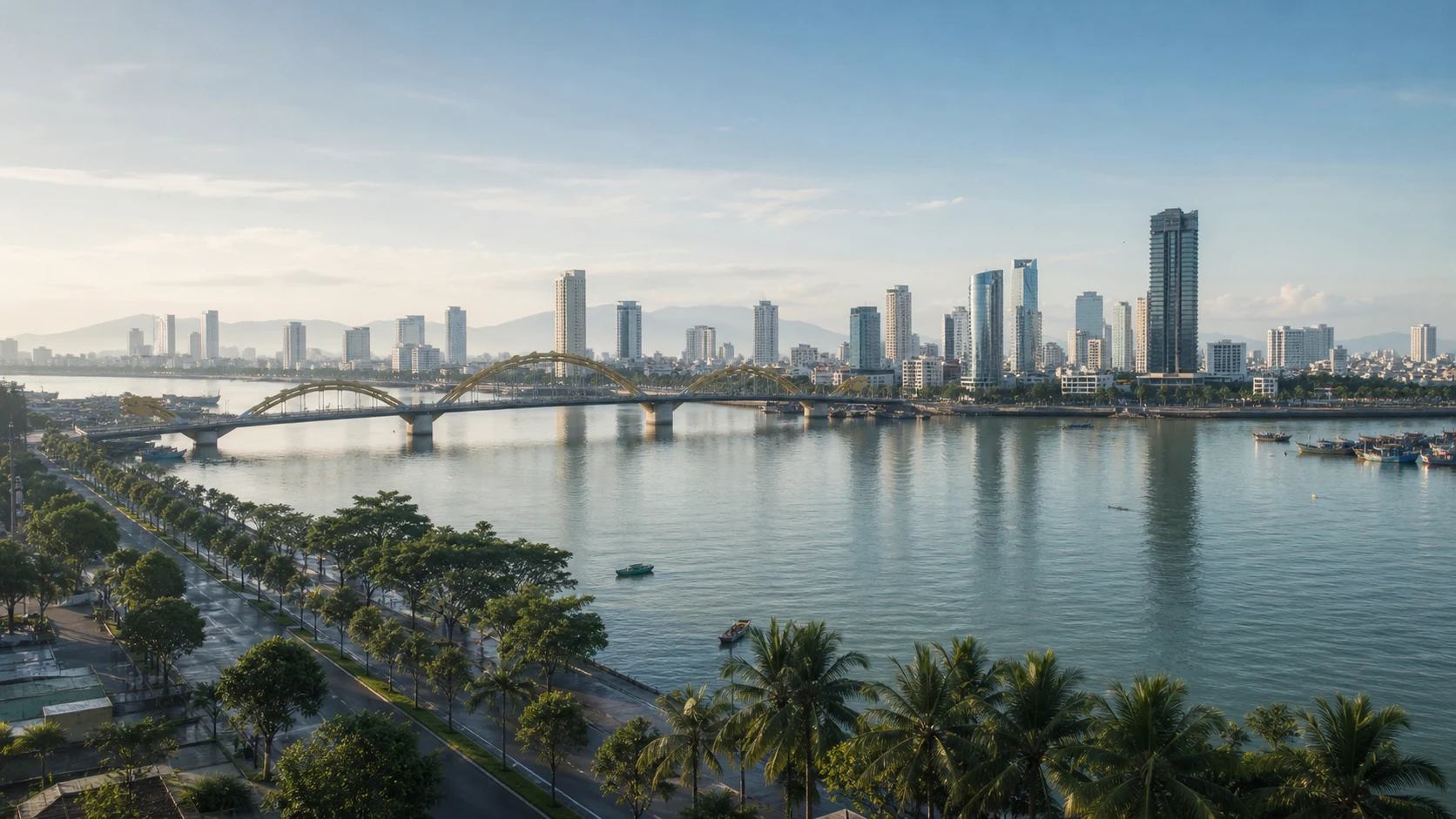
Should this destination stay on your shortlist?
Selective candidate for personal use. Establish residence separately and proceed only when independent counsel verifies the exact project's eligibility, quota, certificate route, permitted use and exit mechanics.
The verdict
The verdict is cautiously positive for a buyer seeking personal use in Da Nang, provided legal eligibility is solved before price. Vietnam's 2023 Housing Law, effective from 1 January 2025, permits eligible foreign individuals who are allowed to enter Vietnam to own specified housing in qualifying commercial-housing projects. The familiar guardrails remain material: foreign ownership in an apartment building is capped at 30% of the units, restricted defence or security areas and project status matter, and the ordinary foreign-individual term is up to 50 years from the certificate with a possible extension under the implementing rules. This is a project-and-unit pathway, not a general right to buy any apartment, house or land advertised online.
Buying a home does not provide residence. Vietnam's official e-visa currently permits a stay of up to 90 days, single or multiple entry, but that visitor permission does not establish a long-stay retirement route. A buyer planning to live in Da Nang for much of the year must obtain current immigration advice and establish an independent lawful residence route, private-health plan and tax position before committing capital. Hoi An should be treated primarily as a heritage and lifestyle catchment in this dossier, not as evidence that a foreigner can acquire any traditional house in or around the old town.
The strongest use case is therefore a well-documented Da Nang apartment for extended personal stays: an address with ordinary groceries, hospital access, reliable building management, defensible flood and storm exposure, and a future buyer pool that does not depend on nightly tourism. The weakest case is an off-plan or hotel-branded unit bought because a seller promises rent, permanent ownership or automatic eligibility. Proceed only after an independent Vietnamese lawyer confirms the exact project, foreign quota, seller authority, land-use term, certificate route, permitted use, management rules, taxes and exit mechanics in writing.
Da Nang / Hoi An through five destination lenses
Five questions decide whether the central-Vietnam proposition works beyond a holiday: whether ordinary life is comfortable through heat and rain, whether the airport advantage survives the last mile, whether the exact unit is legally available, whether income survives regulation and costs, and whether another eligible buyer will want the asset on exit.
Build daily life around Da Nang, not the resort brochure
Da Nang's lifestyle case is broad rather than theatrical. The Han River, My Khe coast, Son Tra peninsula, markets, cafés and strong central-Vietnam food culture provide genuine variety, while the city remains an employment and services centre rather than a seasonal resort. Hai Chau offers the densest everyday network and a short airport journey. My Khe and Phuoc My bring the beach into daily life, but add traffic, salt exposure and a more tourism-shaped streetscape. Ngu Hanh Son and Hoa Hai offer newer development and more space, with longer journeys to established hospitals and central services. Hoi An adds architectural character and a slower rhythm, but it is not a substitute for Da Nang's urban systems.
Healthcare needs an address-level plan. The Ministry of Health's current electronic-record registry identifies Da Nang Hospital as a public, local level-one hospital with a stated 1,500–2,000-bed scale and lists emergency, cardiology, anaesthesia and intensive-care management fields. That establishes useful service breadth, not guaranteed capacity, language, insurer acceptance, waiting time or the availability of a chosen treatment. Da Nang unified its emergency medical number under 115 citywide from October 2025. Confirm current services directly, visit preferred providers and time the journey in traffic and heavy rain.
Climate comfort is part of the operating cost. Hot, humid months increase cooling, mould and corrosion risk; the wet and typhoon seasons test drainage, glazing, balconies, backup power and access. In an apartment, ask how the building manages façade leaks, lift outages, water ingress, generators and emergency communications. In Hoi An and low-lying parts of the wider coastal plain, annual flooding is not an abstract hazard: UNESCO itself identifies flooding among the pressures on the heritage property. A good retirement base should remain safe, supplied and socially useful on an ordinary wet weekday, not only in clear-season photographs.
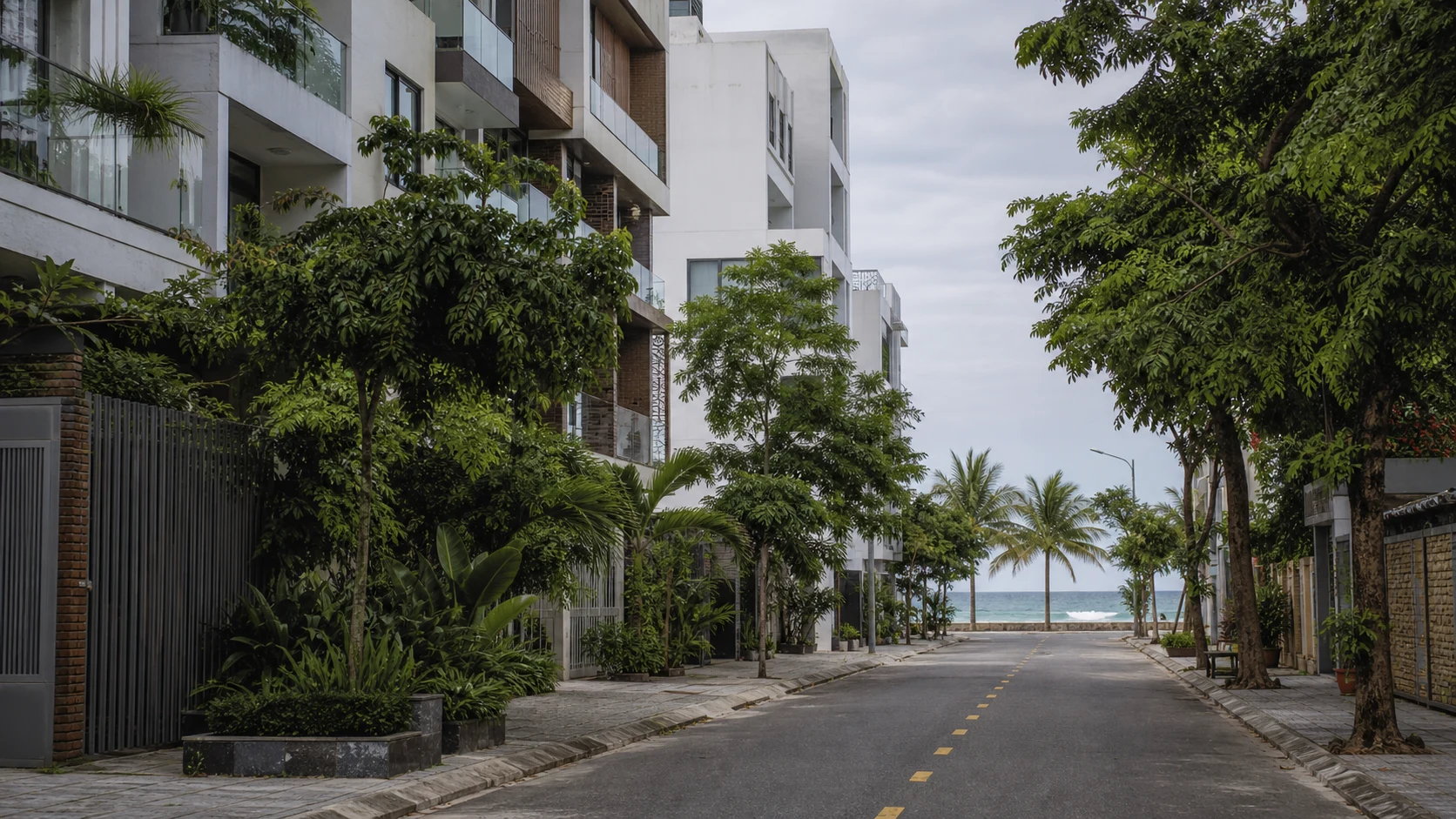
Use the airport advantage without confusing access with integration
Da Nang International Airport is close to the city centre, and the operator's current network page lists 13 domestic destinations. Airports Corporation of Vietnam reported 26 domestic and international routes in 2025 and more than 130 flights a day on average. That is a meaningful advantage for regional travel and domestic connections, especially compared with remote island or mountain markets. It does not make every address equally convenient: river bridges, beach traffic, construction and storm disruption can materially change the final journey, while Hoi An adds a longer road transfer.
Foreigner fit is strongest in the practical urban corridor. International tourism, universities, hospitals and a developed hospitality sector make Da Nang easier to navigate than a small provincial town. English is present in property marketing and visitor services, but the controlling systems—law, land and housing records, tax, condominium governance, utilities and dispute resolution—operate in Vietnamese. Use an independent bilingual lawyer and interpreter whose fees are not contingent on the sale. Translate the reservation, sale agreement, project approvals, land record, foreign-quota evidence, management rules and certificate documents before signing.
Test access as a resident rather than a passenger. Time the apartment-to-airport journey with luggage; map grocery, pharmacy, hospital and social routes; and learn which trips require a car or ride-hailing service. My Khe can feel close to everything while a river crossing still controls key journeys. Hoa Hai and newer southern districts may offer more modern stock but less mature street-level convenience. Hoi An rewards repeated visits and cultural engagement, yet specialist healthcare and the airport remain tied to Da Nang. The airport supports the proposition; an address with weak ordinary services does not inherit that strength automatically.
Prove the project, quota and permitted use
Foreign ownership begins with statutory eligibility and narrows from there. Under the current Housing Law and the Ministry of Construction's March 2026 consolidated implementation text, which incorporates Decree 95/2024 as amended by Decree 54/2026, an eligible foreign individual may acquire specified housing in a qualifying commercial-housing project, subject to entry status, project geography, the 30% apartment-building quota and the applicable term. A listing portal, sales reservation or developer brochure does not establish eligibility. Require official project eligibility, current foreign-quota confirmation and the exact certificate pathway from independent counsel and the competent authorities.
The legal package should answer more than the headline term. Confirm the developer or seller's authority, land-use purpose and remaining term, construction and acceptance records, bank security or release, completion timetable, taxes, maintenance fund, management company, common-property rights, parking, transfer restrictions and what happens if a certificate is delayed. For resale, reconcile the existing certificate with the seller and unit. For off-plan stock, treat incentives, handover dates and marketing renderings as seller claims until supported by approvals and the contract. The Ministry of Construction's 2026 procedure confirms that a foreign owner's extension is an application process rather than an automatic perpetual right.
Use is a separate legal question. Current government guidance on the 2023 Housing Law states that condominium apartments may not be used for non-residential purposes. Tourism accommodation operates within the Tourism Law, local oversight and business requirements; Da Nang's 2026 programme specifically addresses tourist accommodation and service quality. A residential unit, hotel-style amenity package or seller rental forecast does not prove nightly operation is lawful. Obtain written confirmation of the unit's approved function, building rules, operator licence, tax treatment and any stay restrictions before assigning income to it.
Hazard and conservation controls also attach to the exact site. World Bank material identifies pluvial and fluvial flooding, storm surge, variable rainfall and sea-level rise as relevant to Da Nang's resilience planning. Hoi An's UNESCO status brings conservation and buffer-zone responsibilities that can restrict alteration and intensify review. Order current planning, flood, drainage and building evidence for the parcel or project; inspect after heavy rain where possible; and obtain insurance terms that address storm, flood, water ingress, contents, liability and vacant periods.

Underwrite resident demand before tourist income
Da Nang has real resident and visitor demand, but there is no defensible destination-wide net yield for a foreign-accessible apartment. Long-term demand varies by employment node, building quality, furnishings, parking and access. Tourist demand varies by season, beach position, operator, lawful accommodation status and platform conditions. Begin with matched twelve-month leases in the same building, then deduct vacancy, management, maintenance, common charges, utilities, tax, furnishings, repairs and foreign-owner administration. Model no rent as well as the permitted rental case.
Official price evidence has an important gap: no current Da Nang completed-apartment series was identified. The city's statutory residential-land schedule shows a steep central-to-southern value gradient, but bare land cannot validate a finished apartment ask or isolate building quality, remaining land term, project status, usable area, view or foreign eligibility. Treat portal medians as inventory context only. Before negotiating, obtain a candidate-specific valuation and ask two unrelated agents for matched completed transactions in the same building or the closest defensible alternatives.
Capital upside is plausible where infrastructure, employment and liveability widen the future resident pool, but it should not be purchased as a forecast. New supply can dilute scarcity; certificate delays and project-specific legal status can overwhelm city growth; and a foreign-owned unit may face a narrower eligible resale market. Prefer a building that works for ordinary Vietnamese and eligible foreign residents, not one whose case depends on a guaranteed-rent pitch. Demand evidence, not tourism headlines, should support the exit thesis.
Pay for a future buyer, not a cheap headline
Da Nang can look inexpensive beside established Asian gateway cities, but value entry begins after legal and operating adjustments. Current consolidated Ministry of Finance guidance sets the house-and-land registration-fee rate at 0.5%; the taxable base, exemptions, contract taxes, developer charges, maintenance fund, legal work, translation, registration, furnishing and finance remain transaction-specific. For off-plan stock, include completion and certificate-delay scenarios. Obtain a property-specific closing statement from a Vietnamese lawyer and tax adviser before commitment rather than applying one headline percentage to every unit.
Exit liquidity depends on who can legally and practically buy next. A central, completed apartment with clear records, functioning management and a layout useful to resident households should reach a broader pool than a branded hotel-style unit with uncertain use or an unfinished fringe project. Hoa Cuong Nam offers central access and newer supply; Phuoc My offers beach proximity but more tourist exposure and potentially higher operating costs; Hoa Hai offers larger floorplates at lower unit prices but depends more on the southern growth corridor. Hoi An heritage character does not make a Da Nang apartment liquid, and a traditional-house narrative cannot replace verified ownership eligibility.
Before exchange, request the current certificate or complete issuance pathway, project approvals, foreign-quota evidence, management accounts, maintenance-fund records, insurance, defects history, handover status, utility debts and any rental or occupancy rules. Ask two agents who did not introduce the unit to identify the likely next buyer, current competing supply and objections that would slow a sale. Preserve every translated document and approval for the next purchaser. A robust purchase is one that remains useful with no tourist rent and explainable when market sentiment is weaker.
The final choice should reflect the life the buyer will actually lead. Hai Chau and the Han River corridor support urban convenience; My Khe and Son Tra exchange some convenience for immediate coast; Ngu Hanh Son and Hoa Hai offer newer residential options with more last-mile dependence; Hoi An supplies cultural depth but brings heritage, flood and access constraints. The lowest asking price is not automatically value. Value is the combination of lawful acquisition, durable personal use, controllable carrying costs and a credible eligible buyer on exit.
The Atlas assessment
Here’s how Da Nang / Hoi An scores on the ten factors that matter most when choosing a long-term home abroad.
| Dimension | Score | Weight | Atlas read |
|---|---|---|---|
| Lifestyle magnetism | 4.5/5 | 10% | Da Nang combines the Han River, My Khe coast and year-round city life; Hoi An adds heritage character with greater flood and access constraints. |
| Global access | 4.1/5 | 10% | Da Nang airport sits close to the urban core and supports a useful regional network, while Hoi An adds a material road transfer. |
| Ownership clarity | 2.3/5 | 12% | Vietnam permits eligible foreign buyers in qualifying projects, but Da Nang project status, 30% quota, certificate route and 50-year term require written verification. |
| Regulatory safety | 2.7/5 | 8% | Da Nang apartment use, tourist accommodation, project approvals, building governance and flood exposure must all be cleared for the exact unit. |
| Rental profit | 3.0/5 | 13% | Da Nang has resident and visitor demand, but lawful use, seasonality, management costs and foreign-title constraints prevent a credible destination-wide net yield. |
| Capital upside | 3.4/5 | 9% | Da Nang infrastructure and regional growth support selected completed projects, while new supply, certificate risk and seller-led forecasts weaken speculative cases. |
| Retirement fit | 3.6/5 | 11% | Da Nang offers major-city services and hospital access, but residence, private health cover, heat, storm resilience and address-level convenience remain personal constraints. |
| Exit liquidity | 3.0/5 | 9% | Central Da Nang apartments with clear certificates and resident utility should resell more easily than fringe, hotel-style or legally uncertain stock. |
| Foreigner fit | 3.7/5 | 7% | Da Nang is internationally familiar, but Vietnamese-language legal, tax, management and certificate systems make independent bilingual support essential. |
| Value entry | 4.3/5 | 11% | Da Nang asks remain accessible by regional standards, but only consistent usable-area pricing and complete legal and operating costs reveal genuine value. |
Weighted assessment: 3.5/5. Reviewed 2026-08-24. Read the scoring methodology.
What homes cost
These three current asking observations illustrate distinct Da Nang apartment choices; they do not establish foreign eligibility, title, lawful rental use, completion, availability or value. Compare the stated usable area and total local-currency price, then verify the project, unit and complete buyer cost independently.
Masteri Rivera 1-bedroom apartment
- Asking price
- 3,400,000,000 VND
- Area
- 47.4 m²Portal-stated usable area of 47.4 m²
- USD comparison
- $134,691$2,842/m²
- Buyer relevance
- Central Hoa Cuong Nam observation opposite Lotte Mart. The seller advertises expected Q3 2026 handover and incentives; completion, final price, project eligibility, foreign quota, certificate route, permitted use, charges and availability require independent confirmation.
Local comparison — why it matters: ₫340.97m/m². Official 2025 statutory residential-land schedule, position 1, retained for the former Da Nang area in 2026. It indicates central land-value intensity; it is not an apartment price and does not value Masteri Rivera's building, usable area or rights. Da Nang Decision 45 residential-land schedule
FPT Plaza 2 two-bedroom apartment
- Asking price
- 3,200,000,000 VND
- Area
- 70.0 m²Portal-stated usable area of 70 m²
- USD comparison
- $126,768$1,811/m²
- Buyer relevance
- Hoa Hai observation in the FPT City corridor with the lowest usable-area price of the sample. Seller claims about access, demand and appreciation are not verified; title, project eligibility, foreign quota, certificate, permitted use, condition, charges and availability require independent confirmation.
Local comparison — why it matters: ₫34.50m/m². Official 2025 statutory residential-land schedule, position 1, retained for the former Da Nang area in 2026. It gives southern-corridor land context; it is not an apartment price and does not value FPT Plaza 2 or its usable area. Da Nang Decision 45 residential-land schedule
Altara Suites one-bedroom apartment
- Asking price
- 5,020,000,000 VND
- Area
- 56.0 m²Portal-stated usable area of 56 m²
- USD comparison
- $198,867$3,551/m²
- Buyer relevance
- Furnished seventh-floor Phuoc My observation near My Khe Beach. Hotel-style amenities and seller rental language do not prove lawful accommodation use; title, project eligibility, foreign quota, certificate, charges, operator terms and availability require independent confirmation.
Local comparison — why it matters: ₫279.64m/m². Official 2025 statutory residential-land schedule, position 1, retained for the former Da Nang area in 2026. It shows the coastal road's land-value signal; it is not an apartment price and does not value Altara Suites, amenities or legal use. Da Nang Decision 45 residential-land schedule
Current asking evidence, not completed-sale valuations. Confirm availability, title, legal use, area, condition, fees and negotiability for the exact property.
Acquisition Costs
| Property price | $284,000 |
|---|---|
| Property price evidence | aligned benchmark |
| Acquisition costs | $1,599 ($1,595–$1,602) |
| Effective rate | 0.6% |
| All-in acquisition capital | $285,599 ($285,595–$285,602); conditional route |
| Purchase route | Conditional: Eligible commercial-project apartment resale |
| Acquisition benchmark | Calculable |
| Acquisition evidence | medium |
No conditional acquisition items identified.
Base cost breakdown
| Component | Category | Amount |
|---|---|---|
| Buyer title-conveyancing registration fee | tax | $1,420 |
| Notarization fee | legal | $159 |
| Da Nang land/title registration service | registration | $19 ($16–$23) |
Route basis: A foreign individual permitted to enter Vietnam may buy qualifying housing in an eligible commercial residential project outside defense/security-restricted areas, subject to the 30% building quota. For this resale baseline, the seller must be a foreign owner permitted to transfer the unit to another eligible foreign buyer; the buyer receives only the remaining duration of the seller's original foreign-ownership term, not a fresh 50-year term. Any later extension is a separate approval. Ordinary Vietnamese-owner resale stock is not assumed eligible, and the buyer receives housing ownership rather than Vietnamese land ownership.
Jurisdiction basis: The post-1 July 2025 Da Nang municipality is the jurisdiction for both Da Nang and the former Quang Nam/Hoi An area. The legacy Da Nang city registration-service tariff is used as the representative local proxy and may not yet be uniform in the former Hoi An wards. The current benchmark converts to about VND7.47 billion.
Buyer scenario: Nonresident individual · second home · cash · resale · no reliefs
Reviewed: 2026-09-04
Sources
- Knight Frank - Vietnam Investment Guide 2025
- Vietnam Housing Law No. 27/2023/QH15
- Chambers Global Practice Guides - Real Estate 2026 Vietnam
- Vietnam Government Decree No. 10/2022/ND-CP on registration fees
- Vietnam Ministry of Finance Circular No. 257/2016/TT-BTC
- Da Nang City - Decision 24/2023 registration service prices
- Da Nang City - 2025 administrative merger summary
Where to look
Choose the daily operating system before the view. These four areas describe distinct patterns, not investment zones; verify the exact project's foreign eligibility, certificate route, permitted use, flood exposure, healthcare journey and future buyer pool.
Da Nang core
- DAD airportClose urban gateway
- Hai Chau / Han RiverCentral services
- Da Nang HospitalMinistry-registered public hospital
- My Khe / Son TraResidential coast
South and heritage
- Ngu Hanh SonNewer residential corridor
- Hoa Hai / FPT CityTechnology and education node
- Hoi AnUNESCO heritage town
- Coastal plainFlood and storm diligence
| Micro-location | Best for | Daily life | Primary diligence |
|---|---|---|---|
| Hai Chau / Han River | Urban services and airport access | Dense groceries, dining, civic services and short cross-city journeys; building and street conditions vary sharply. | Project eligibility, quota, certificate, traffic, noise, drainage, management accounts, parking and future competing supply. |
| My Khe / Phuoc My / Son Tra | Beach-led apartment life | Immediate coast, cafés and visitor services with a tourism-shaped rhythm and bridge journeys to parts of central Da Nang. | Salt, wind, water ingress, storm access, lawful accommodation use, common charges, operator terms and resident resale depth. |
| Ngu Hanh Son / Hoa Hai | Newer stock and larger floorplates | Education, technology and beach access in a growing southern corridor, with more last-mile dependence for established city services. | Completion, certificate route, occupancy, empty sites, construction noise, drainage, transport, foreign quota and competing pipeline. |
| Hoi An and approaches | Heritage and slower cultural life | Walkable historic character and strong visitor economy, but specialist services and the airport remain tied to Da Nang. | Foreign eligibility, heritage and buffer rules, annual flood routes, building alteration, utilities, lawful use and narrower exit pool. |
Buyer checklist—in decision order
- Establish the buyer's independent residence, private-health, tax and banking plan before choosing a property.
- Have independent Vietnamese counsel confirm buyer eligibility, project eligibility, restricted-area status and current foreign quota for the exact unit.
- Verify seller or developer authority, land and project approvals, payment security, completion, acceptance, certificate pathway and remaining term.
- Translate and review the sale agreement, management rules, common charges, maintenance fund, parking, defects, insurance, utilities and transfer restrictions.
- Obtain written confirmation of approved residential or accommodation use; do not rely on seller rent, operator or hotel-brand language.
- Overlay current flood, storm-surge and drainage evidence, inspect after heavy rain where possible and bind address-specific insurance before commitment.
- Model five-year costs and three income cases—lawful long-term rent, exact permitted visitor use and no rent—without a destination-wide yield assumption.
- Compare matched completed evidence where available and ask two unrelated agents to identify the future eligible buyer pool and likely exit objections.
For the national residence, tax and ownership framework, read about buying property in Vietnam. To size the plan, use the retirement abroad calculator. Compare directly with Fukuoka / Itoshima, Valencia and Algarve / Cascais, or open the full Atlas.
Compare this market for FIRE Abroad
References and update policy
Housing, residence, apartment-use, tourism, airport, healthcare, hazard, heritage, exchange-rate, land-schedule, market and listing claims were reviewed on 24 August 2026. Recheck every time-sensitive source no later than 24 February 2027 and immediately after any housing-law, decree, foreign-quota, immigration, apartment-use, tourism, planning, land-price, flood, airport, health-service, market-data or listing change. Obtain current advice from an independent Vietnamese lawyer, tax adviser, property adviser and insurer for the exact buyer, project, unit and intended use. Asking evidence is not a valuation, completed-sale record or availability guarantee.
- Vietnam property guide
- Vietnam Housing Law 27/2023/QH15
- Decree 95/2024/NĐ-CP implementing the Housing Law
- Decree 54/2026/NĐ-CP amending housing and real-estate decrees
- Ministry of Construction: consolidated Housing Law implementation
- Ministry of Construction: 2026 foreign-owner extension procedure
- Vietnam official e-visa portal
- Government guidance: apartment-use restrictions
- Vietnam Tourism Law 09/2017/QH14
- Da Nang: 2026 tourism-service oversight
- Da Nang Airport: current flight routes
- ACV: Da Nang route and flight activity
- ACV: Da Nang airport overview
- Vietnam Ministry of Health: Da Nang Hospital registry
- Da Nang: unified emergency number 115
- World Bank: current Vietnam SURGE programme
- World Bank: Da Nang water-risk profile
- UNESCO: Hoi An Ancient Town
- UNESCO: Hoi An 2026 conservation assistance
- Vietnam Ministry of Finance: August 2026 exchange rate
- Ministry of Finance: consolidated registration-fee decree
- Da Nang Decision 45/2025: statutory land schedule
- Da Nang Resolution 32/2025: 2026 continuation of the land schedule
- Da Nang official report: Decision 45 residential-land benchmarks
- Dot Property: Da Nang apartment market
- Masteri Rivera asking observation
- FPT Plaza 2 asking observation
- Altara Suites asking observation