Start here
Buying property does not give you residency
Foreign buyers can generally acquire and register a home in Japan, but ownership does not create a visa, a status of residence, permanent residency, or access to public healthcare. Establish a lawful long-stay route before treating a purchase as a retirement home.
For the acquisition process, costs and owner obligations, see buying property in Japan as a foreigner.
Japan does not have a general retirement visa. The closest official option for some affluent long-stay visitors is the designated-activities route for sightseeing and recreation. It is limited to nationals of visa-waiver countries or regions, requires savings of at least ¥30 million for the applicant and spouse, normally permits six months, and can reach a maximum of one year after an extension. Dependent children cannot accompany the applicant under this route. See the Ministry of Foreign Affairs requirements and the Immigration Services Agency status list.
Decision rule: do not buy for full-time retirement until an immigration professional has confirmed the residence path, its renewal limits, and whether a spouse or dependent can use the same plan.
Who Japan suits
Japan is a strong fit for buyers who already have a credible residence route, value safety, transport, food and healthcare access, can operate in a Japanese-language administrative environment, and prefer lifestyle utility over aggressive yield.
Look elsewhere first if the property is expected to create residency, easy non-resident leverage is essential, short-term-rental income must carry the investment, or family members need a simple dependent pathway.
Before making an offer, complete the immigration, financing, tax, hazard, building, management and exit checks in that order. A technically purchasable property is not necessarily a workable retirement plan.
What changed for foreign owners in 2026
Non-resident acquisition reporting
Under the Foreign Exchange and Foreign Trade Act, a non-resident who acquires Japanese real estate or a right in it generally must report the acquisition to the Minister of Finance through the Bank of Japan within 20 days. The report is in Japanese and may be filed by a Japan-based agent. Confirm the current scope and exemptions with the Ministry of Finance.
Owner details must stay current
From April 2026, registered owners who change their name or address are required to apply for an update within two years. Overseas owners should agree in writing who will monitor notices and handle registration changes. See the Ministry of Justice guidance.
Rules remain under review
The Japanese government is continuing to review how foreign land acquisitions should be recorded and governed. That does not mean a general foreign-buyer ban is in force, but it makes a current legal check essential before exchange and closing. Follow the Cabinet Secretariat review.
Financing and ownership costs
Do not assume that clear ownership means easy financing. A non-resident without Japanese income or a domestic credit history may face a smaller lender pool, lower loan-to-value limits, additional guarantor requirements, or a cash-only transaction. Obtain written lending terms before making a non-refundable commitment.
Budget separately for the purchase price, brokerage and legal support, registration and acquisition taxes, insurance, repairs, condominium or resort management fees, annual fixed-asset costs, and eventual sale costs. Japan taxes property at acquisition, during ownership, and on disposal; the applicable reliefs depend on the buyer, asset, use and date. Start with the Ministry of Land property-tax overview, then obtain a transaction-specific estimate from a Japanese tax adviser.
Decision rule: compare five-year total cash outlay rather than the listing price alone, and keep a separate reserve for building and equipment replacement.
Retirement practicality beyond the purchase
Healthcare follows residence status
Owning a home does not itself create eligibility for Japan's public health-insurance system. Eligibility depends on residence and enrolment rules. Confirm coverage before moving and maintain appropriate private or travel insurance for any period outside the public system. The Ministry of Health guidance identifies categories, including short-stay foreign visitors, who are not eligible for National Health Insurance.
Earthquake, flood and building diligence
Review the property's structural survey, seismic standard and retrofit history, soil and slope conditions, flood, tsunami and landslide exposure, evacuation access, insurance availability, and the condition of roofs, waterproofing, plumbing and heating. Check the national hazard-map portal and the municipality's own maps; national screening does not replace an asset-level inspection.
Condominium and absentee-owner governance
For an apartment, read the management bylaws, reserve-fund balance, major-repair plan, meeting minutes, arrears, litigation, pet and renovation rules, and any restriction on short-term letting. An overseas owner also needs a reliable domestic contact or manager. MLIT publishes a guide for foreign condominium owners.
Short-term rentals are regulated
Under the national private-lodging route, notified minpaku operations are capped at 180 days a year. Municipal ordinances and condominium rules can be tighter, and hotel or ryokan licensing follows a different route. Verify the exact property before underwriting any income. See the Japan Tourism Agency overview.
Japan through five retirement lenses
Japan is compelling for retirement not because it is cheap or effortless, but because a few places make daily life unusually dependable. We use the same ten-pillar methodology as the Atlas, grouped here into five questions that matter most when a home must work for months, not weekends.
Live well, year after year
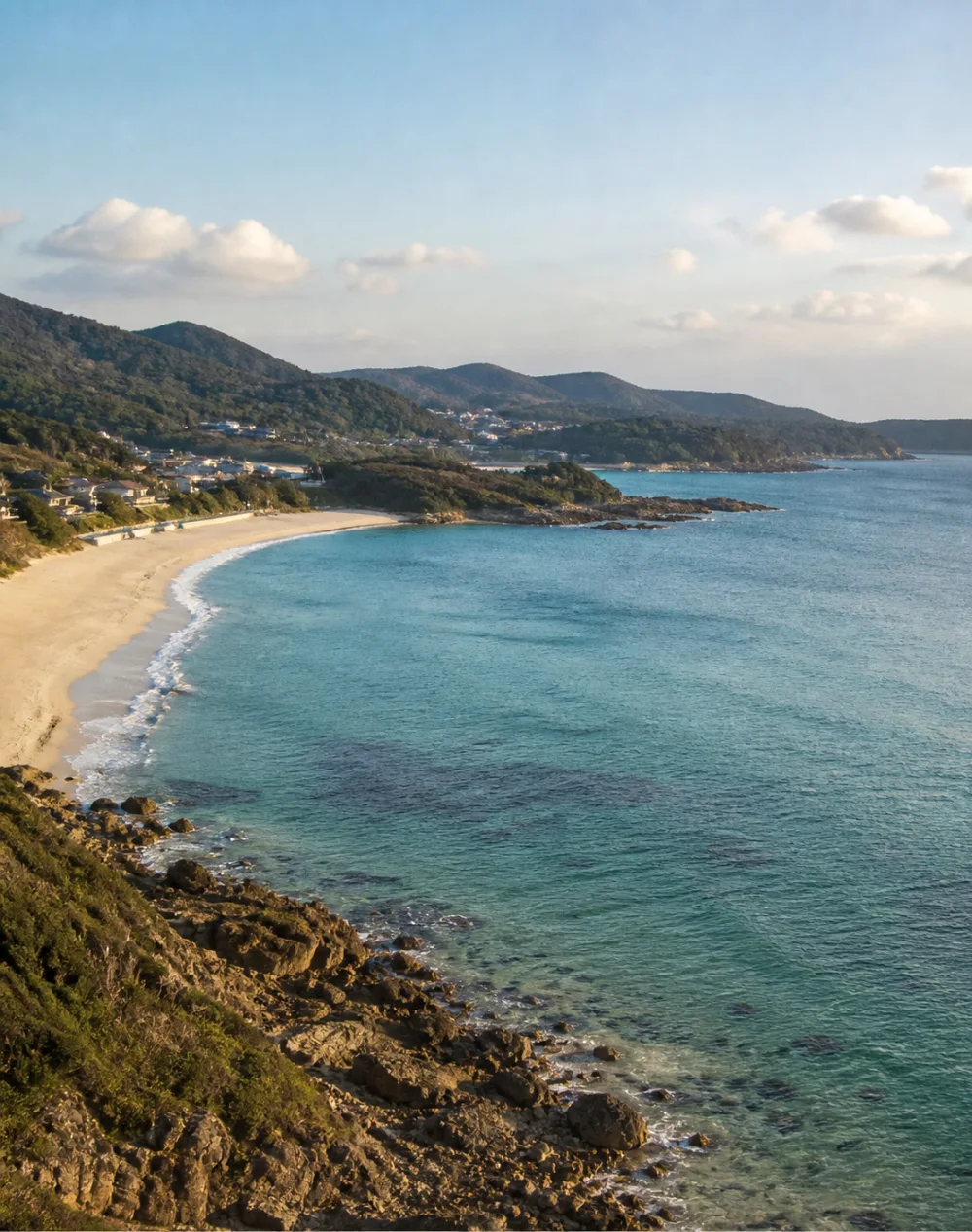
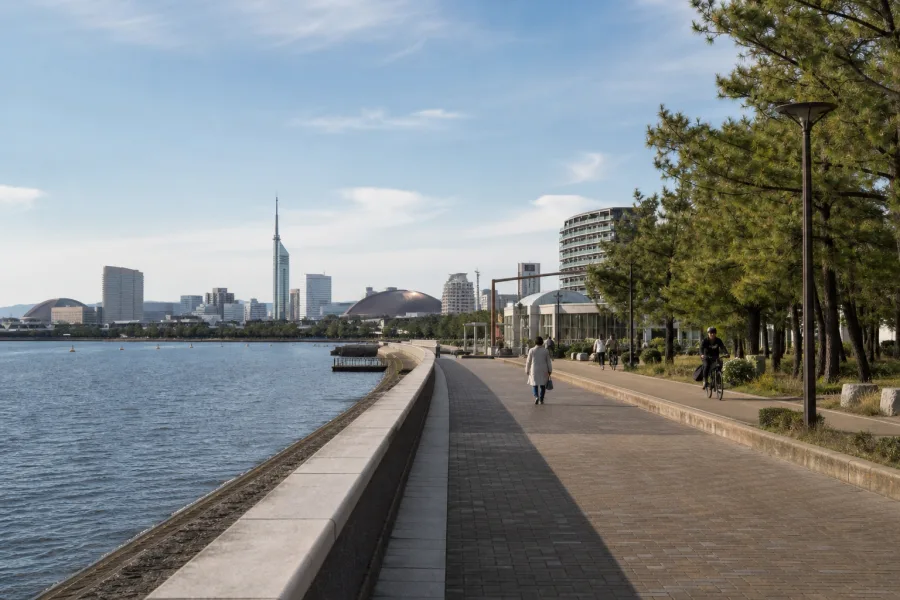
Fukuoka and Itoshima are the strongest all-season answer: city hospitals, a serious food culture and Kyushu at the doorstep, with coast available when the day should slow down. Hakone and Izu exchange city energy for onsen, gardens and a Tokyo-adjacent rhythm. Hakuba and Niseko are more deliberate choices: outstanding winter, increasingly credible green-season activity, but a life shaped by snow and shoulder season.
Healthcare follows a sequence. A long-stay residence status comes first; then you register an address with the municipality. The Ministry of Health says eligible foreign residents, including those living in Japan for more than three months, can join the public system—through employee cover when employed, or National Health Insurance otherwise. A property deed does not create residency or coverage. Fukuoka therefore has the clearest retirement utility of the four, while a mountain or resort home asks you to accept longer journeys for specialist care and a more seasonal social calendar.
Reach it easily—and feel at home there
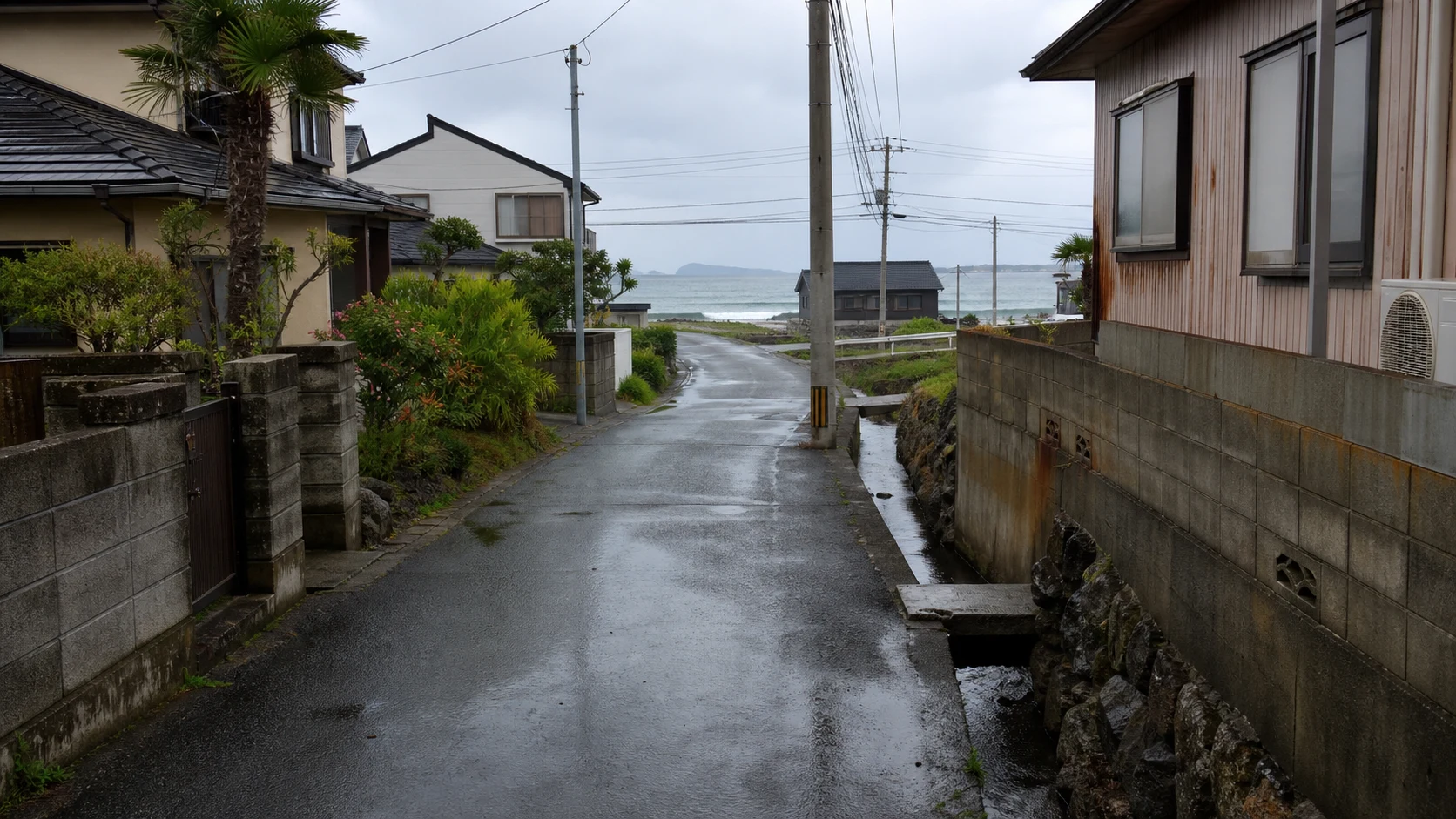
Fukuoka wins on friction: JNTO notes that Hakata is a five-minute train ride from Fukuoka Airport. That changes how often a home gets used, and makes Korea, Taiwan and wider Asian connections genuinely convenient. Hakone and Izu work for Tokyo-based lives; Hakuba and Niseko require a winter-transfer plan, not a romantic assumption about the last mile.
Niseko has the most established international resort ecosystem and strong Chinese-speaking familiarity. Fukuoka offers deeper year-round urban services. In every location, Japanese remains the language of tradespeople, clinics and municipal administration; politeness is generous, but integration comes through repetition and language effort rather than an English-speaking bubble.
Own and operate cleanly
Foreigners can generally own Japanese land and buildings freehold. That clarity is a real advantage, but it is separate from residency, financing and public-health eligibility. For a non-resident purchase, the Ministry of Finance says FEFTA reporting is generally required through the Bank of Japan within 20 days after acquisition. Real estate acquisition tax and registration licence tax are separate purchase costs; fixed-asset tax is an ongoing owner cost. Where the seller is also non-resident, Japanese withholding rules can affect settlement, so the payment route needs a tax adviser before contracts are exchanged.
Before signing, the agent's Important Matters Explanation is where the relevant rights, restrictions and hazard information should be explained; closing and registration then record the transfer. The explanation must show the property's location on the official flood-hazard map. Treat that as a starting point, not a clean bill of health: in Hakone and Izu, older stock, slope, typhoon and earthquake exposure are part of the asset; in Hakuba and Niseko, snow load, winter access and heating systems are. Rental use is equally market-specific. In Niseko and Hakuba, the operating model matters as much as the chalet: management, snow response and local compliance shape the income result. Minpaku is capped nationally at 180 days a year, and local rules can be tighter.
Income and upside need different stories
Fukuoka's case is domestic and regional demand: a practical city base, resilient travel and a lower entry benchmark than global resorts. Hakone and Izu benefit from Tokyo weekend demand, but old homes and uneven rental evidence make them a personal-use-first decision. Hakuba is the earlier-stage ski proposition—lower entry than Niseko, a growing international profile and summer hiking or biking, offset by execution-heavy winter operations.
Niseko is the premium version: global Asian and Australian ski demand, high winter rates and branded-residence appeal. The cost is a far higher entry level, substantial operating friction and a more concentrated seasonal thesis. Neither resort should be described with a single yield number; owner use, management, snow, maintenance and the local permit route decide the outcome.
Preserve the exit—and the entry discipline
Fukuoka is the broadest retirement asset of the four because domestic city demand sits beneath the foreign-buyer story. Hakone and Izu can offer striking low entry prices, but the gap between a charming bargain and an expensive renovation is wide. Hakuba has thinner liquidity than Niseko, so the price paid and the operator selected matter more.
Niseko has the clearest international resort buyer pool, but prime Hirafu pricing already reflects that recognition. The retirement conclusion is not that one location wins every pillar: choose Fukuoka for year-round use, Hakone or Izu for Tokyo-adjacent escape, Hakuba for earlier-stage mountain upside, and Niseko only when the premium winter thesis and its costs are fully acceptable.
Estimate your retirement capital
Start with destination expenses in today's money, then account for inflation, reliable pension and passive income, housing, property acquisition, and a liquid portfolio.
Open the retirement abroad calculatorFour Japanese destinations to compare
Choose the type of retirement life before the property. Fukuoka and Itoshima provide the strongest year-round base; Hakone and Izu suit repeat use near Tokyo; Hakuba and Niseko are specialist resort choices that demand stronger management and seasonal-risk tolerance.
| Destination | Best for | Daily-life read | Primary diligence | Rental stance |
|---|---|---|---|---|
| Fukuoka / Itoshima | Year-round living with airport, healthcare and city services | Best all-round retirement base of this shortlist | Flood and tsunami maps, apartment reserves, transport needs in coastal Itoshima | Prefer long-stay demand; verify any short-stay use building by building |
| Hakone / Izu | Tokyo-adjacent second-home or part-time retirement use | Strong leisure access, but car and slope practicality vary | Volcanic, landslide and flood exposure, older homes, onsen rights and maintenance | Treat income as secondary unless the property has a compliant operator |
| Hakuba | Active alpine lifestyle with professional local management | Seasonal resort rather than a default year-round retirement base | Snow load, heating, winter access, staffing, building condition and operating permissions | Operator-dependent and seasonal; stress-test owner-use conflicts and all costs |
| Niseko | Premium resort use for buyers comfortable with high carrying costs | Internationally accessible in winter, less complete for ordinary retirement needs | Service charges, operator contract, owner-use limits, construction quality and resale depth | Do not rely on headline winter revenue; model management, vacancy and shoulder season |
Related Buying Guides
Use these adjacent guides to test the same shortlist from a different buyer intent before committing to local diligence.
Best Places to Buy Property Abroad for Retirement
Compare the best places to buy property abroad for retirement using ownership clarity, healthcare, lifestyle, value, rental resilience, and exit liquidity.
Buying Property Abroad for Retirement
A retirement-focused framework for buying property abroad, comparing ownership clarity, healthcare practicality, lifestyle fit, value, and resale flexibility.
Best Countries to Buy Property as a Foreigner
Compare where foreigners can buy property with ownership clarity, title practicality, lifestyle quality, value discipline, and resale depth.
Where Can Foreigners Buy Property?
Compare where foreigners can buy property using ownership clarity, transaction practicality, lifestyle quality, value, and resale depth across global destinations.
FAQ
Can buying property give a foreigner residency in Japan?
No. Property ownership and immigration status are separate. Buyers need an independent status of residence or another lawful basis for each stay.
Can foreigners buy property in Japan?
Foreign buyers can generally acquire and register land and buildings, but non-resident reporting, financing, tax, management, and location-specific rules still need professional review.
Does Japan have a retirement visa?
Japan does not offer a general retirement visa. A designated-activities route can permit eligible visa-waiver nationals with sufficient savings to stay for six months and, after an extension, up to one year.
Where should retirement buyers compare in Japan?
Start with Fukuoka and Itoshima for year-round city access, Hakone and Izu for Tokyo-adjacent lifestyle use, and Hakuba or Niseko only when a seasonal resort property and professional management fit the plan.
References and update policy
Legal and administrative claims in this guide use Japanese government sources. Rules can change, and local ordinances or building bylaws may be stricter than national rules. Recheck every linked source and obtain current professional advice before signing.
- Ministry of Foreign Affairs: long stay for sightseeing and recreation
- Ministry of Finance: non-resident real-property reporting
- Ministry of Justice: registration obligations from 2026
- MLIT: property-tax overview
- National Tax Agency: non-resident tax when buying or selling real estate
- MLIT: transaction, registration, tax and planning systems
- MLIT: flood-hazard maps in the Important Matters Explanation
- Ministry of Health: health insurance for foreign residents
- Geospatial Information Authority: national hazard-map portal
- MLIT: guide for foreign condominium owners
- Japan Tourism Agency: Private Lodging Business Act
- JNTO: Fukuoka Airport access
- Statistics Bureau: regional consumer-price comparisons