A practical acquisition guide for foreign buyers in Italy, from buyer eligibility and title checks to costs, ownership obligations and destination choice.
By Global Home Atlas Research Team · Published 2026-08-28 · Reviewed 2026-08-28
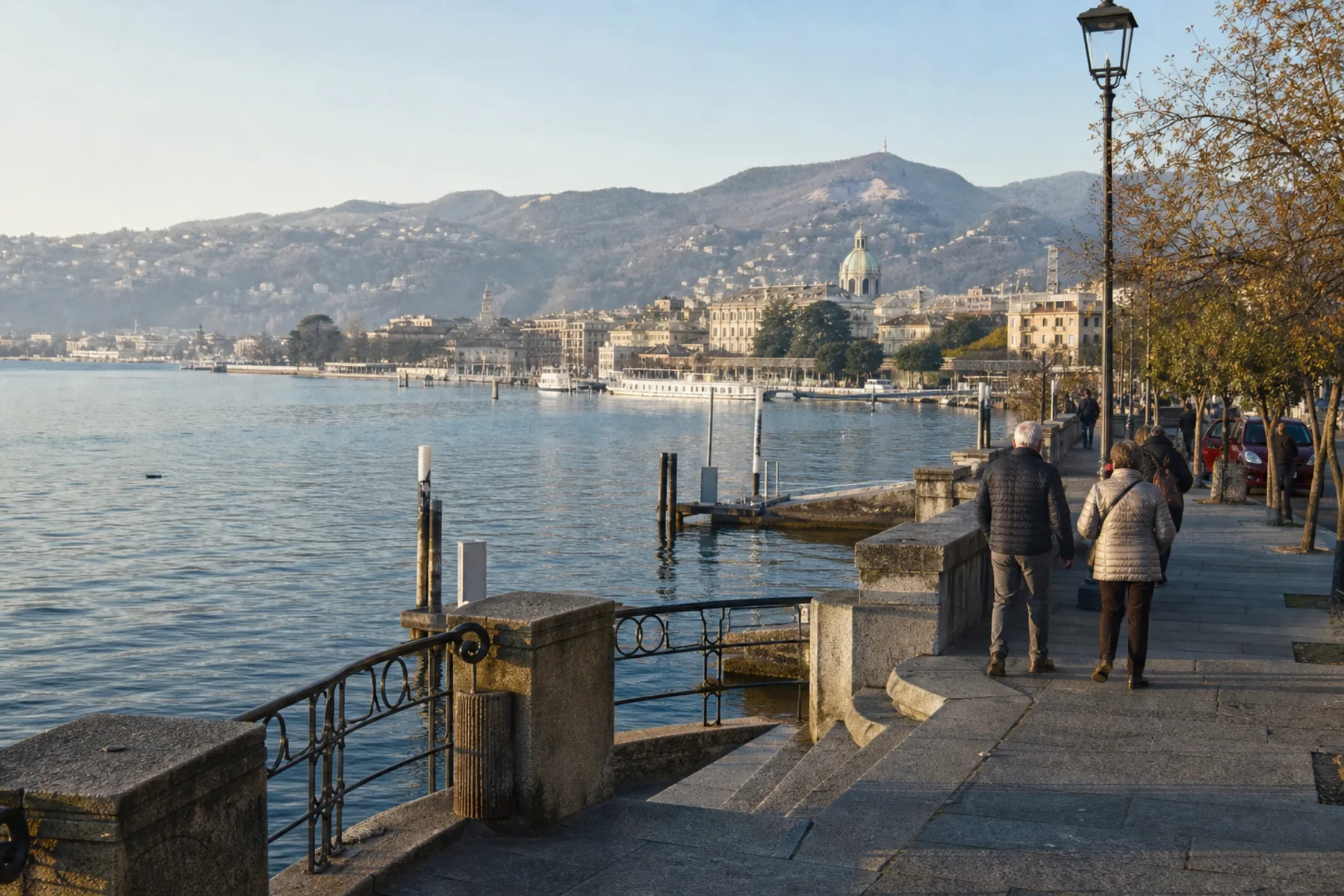
The lower lake places urban services and rail beneath the scenery.
Can foreigners buy?
Foreign-buyer access in Italy depends on the buyer, title and property. EU and EEA citizens and specified legally resident non-EU citizens are exempt from reciprocity verification. Other non-EU buyers need the notary to confirm reciprocity or the applicable treaty position for the proposed transaction.
Does ownership create residency?
Buying a home does not itself create Italian residence. Elective residence is a non-working route for applicants with adequate independent means who genuinely intend to settle; consular requirements and approval remain applicant-specific.
Planning to live in Italy long term? Read the Italy retirement property guide for residence, healthcare and retirement-life planning.
Is financing practical?
Financing in Italy is lender- and borrower-specific. Obtain written terms covering eligibility, deposit, income, currency, valuation and property type before making a binding offer.
What limits short-term rentals?
Rental permission depends on the property's lawful use, local rules, building governance and any operator licence.
Can foreigners buy property in Italy?
Reciprocity depends on the buyer
EU and EEA citizens and specified legally resident non-EU citizens are exempt from reciprocity verification. Other non-EU buyers need the notary to confirm reciprocity or the applicable treaty position for the proposed transaction.
Purchase and residence are separate
Buying a home does not itself create Italian residence. Elective residence is a non-working route for applicants with adequate independent means who genuinely intend to settle; consular requirements and approval remain applicant-specific.
Tax and lawful use depend on the facts
A private resale commonly carries 9% registration tax on the applicable base unless first-home relief applies; developer sales and luxury categories can differ. Local planning, occupancy, condominium and tourist-let rules must be checked separately.
South Tyrol adds resident-housing controls
A conventioned dwelling may be bought but cannot simply be used as a holiday home. New resident-housing policy and tourist-let controls make the unit’s exact conventioning and permitted use a controlling Dolomites diligence item.
How the purchase works
1
Confirm the buyer, title and intended use
Establish who can acquire the proposed title in Italy, who will be registered, and whether the property is for personal use, long-term rent or short stays.
2
Appoint independent advisers
Assign legal, tax, title, inspection, translation, finance and settlement responsibilities before paying a non-refundable deposit.
3
Investigate the exact property
Verify ownership, boundaries, planning, lawful construction, occupancy, leases, building condition, access, utilities, governance and address-level hazards.
4
Review the contract before signing
Confirm price, deposit, conditions, financing, defects, fixtures, possession, tax adjustments, cancellation rights and the documents required to transfer the chosen title.
5
Settle and register the transfer
Coordinate verified funds, final inspection, closing documents, taxes and registration; do not treat payment alone as proof that title transferred correctly.
6
Operate the property after closing
Put tax, insurance, utilities, management, repairs, building notices, rental compliance and future owner-record updates onto a written calendar.
Costs and financing
Cost
When
What matters
Purchase price and contract adjustments
WhenDeposit and settlement
What mattersSeparate the agreed property price from taxes, fees and prorated items; reconcile them in the final settlement statement.
Acquisition and registration taxes
WhenTransfer and registration
What mattersObtain a transaction-specific estimate for Italy; rates and reliefs can depend on buyer status, title, asset, use, location and date.
Professional and financing costs
WhenDiligence through closing
What mattersPrice legal, title, tax, translation, inspection, valuation, mortgage, banking and remittance work separately.
Annual ownership and management
WhenEvery year
What mattersBudget annual tax, insurance, community or condominium charges, utilities, local management and a realistic repair reserve.
Rental and eventual sale costs
WhenDuring operation or exit
What mattersModel licensing, operator, income-tax, vacancy, brokerage, disposal-tax and transfer costs before relying on yield or resale proceeds.
Rules after purchase
Keep title and owner records current
Confirm the registered owner, title form, address and local registration requirements in Italy; assign ongoing owner administration before closing.
Budget for the building, management and repairs
Review building condition, condominium or community governance, management charges, reserves, insurance and planned repair work before committing.
Verify rental and lodging authority
Rental permission depends on the property's lawful use, local rules, building governance and any operator licence.
Maintain the tax, hazard and insurance file
Confirm acquisition and annual tax obligations, address-level hazards and insurability; retain the records needed for ownership, rental activity and eventual sale.
€353,000–€1,500,000 · 3 asking observations · captured through 2026-08-23
All-in $1,068,315; known-base/incomplete Conditional: Direct individual purchase conditional on nationality and unrestricted second-home status · medium confidence
World-class mountain scenery; excellent food
Conventioned or resident-restricted housing, unclear tourist-use status, portal area mismatch, winter access, alpine hazards, older energy systems and a narrow premium resale pool.
All-in $1,068,315; known-base/incomplete Conditional: Direct individual purchase conditional on nationality and unrestricted second-home status · medium confidence
Best for: World-class mountain scenery; excellent food
Verify first: Conventioned or resident-restricted housing, unclear tourist-use status, portal area mismatch, winter access, alpine hazards, older energy systems and a narrow premium resale pool.
These are dated asking observations, not valuations or market averages.
Before making an offer
Confirm that this buyer can acquire this title in Italy.
Match the contract buyer to identity, address, bank and registration records.
Confirm intended use against planning, building and rental rules.
Resolve title, boundaries, security interests, occupancy and access.
Inspect the structure, services and address-level hazards.
Obtain a written total-cash requirement and financing decision.
Assign tax, insurance, management, repair and resale responsibilities.
Frequently asked questions
Can a foreigner buy property in Italy?
It depends on the buyer, title and property. Start with the eligibility rules above, then have the exact asset and transaction verified before signing.
Does buying property in Italy create residency?
Buying a home does not itself create Italian residence. Elective residence is a non-working route for applicants with adequate independent means who genuinely intend to settle; consular requirements and approval remain applicant-specific.
What should be checked before making an offer?
Confirm buyer eligibility, title, lawful construction and use, building condition, hazards, total costs, financing, tax, rental authority and the likely resale pool.
Are the destination prices valuations?
No. They are dated asking-price observations for market orientation, not completed-sale evidence, valuations or proof of availability.
References and update policy
Rules can change. Recheck every linked source and obtain current professional advice before signing.