Start here
Buying property does not give you residency
An Italian home creates no visa, residence permit or healthcare right. EU retirees can register when they have sufficient resources and comprehensive health cover. A non-EU retiree may qualify for elective residence using stable passive means and suitable accommodation, but elective residence does not permit work and consulates assess the application individually.
Italy's investor visa is based on qualifying investment in government bonds, companies, start-ups or philanthropy—not a home purchase. See the official programme. Non-EU ownership can also depend on reciprocity, so the buyer's nationality and legal structure need confirmation.
Decision rule: prove the residence and healthcare route before selecting Lake Como or an Alpine home.
Who Italy suits
Italy is a strong fit for retirees with an independent residence route, patience for local administration, and a preference for established towns where rail, healthcare and ordinary commerce remain active beyond the visitor season.
Look elsewhere first if a purchase must create residence, the plan depends on immediate short-let income, renovation uncertainty is unacceptable, or a remote mountain home must offer city-level healthcare and effortless winter access.
What changed in 2025–2026
Since 2 January 2025, the national identification code—CIN—and associated safety requirements have been enforceable for tourist accommodation and short-term rentals. Regional and municipal registration, planning and condominium rules still sit underneath the national layer.
This is not a general permission to operate. Lake Como spans Lombardy municipalities with different local pressures, while South Tyrol has its own provincial accommodation regime. Confirm the specific unit, use class and operating model before valuing rental income.
Financing and ownership costs
On an ordinary second-home purchase from a private seller, the buyer generally pays 9% registration tax on the cadastral basis, plus fixed mortgage and cadastral taxes. A qualifying primary home can use 2%; VAT transactions use different rates and bases. The Revenue Agency's official buying guide sets out the distinctions.
Add notary, agency, technical survey, legal and translation work, mortgage costs, municipal IMU where applicable, condominium charges, utilities, insurance and renovation contingency. Nonresident mortgage terms vary sharply by income currency, age, residence and loan-to-value.
Decision rule: obtain a transaction-specific closing and five-year ownership statement before treating the advertised price as the cost.
Retirement practicality beyond the purchase
Healthcare follows status. EU pensioners may register an S1; other lawful residents need the coverage required by their route and must confirm regional registration. Lake Como has easier access to the Milan health network. Dolomite valleys require a realistic winter and specialist-transfer plan.
The notary does not replace buyer diligence. Reconcile title, cadastral plan, planning permission, habitability, energy certificate, liens, easements, boundaries, condominium debts and approved works. Use an independent surveyor for structure, moisture, roof, retaining walls and renovation legality. The Notariat document list is a useful minimum.
Mountain and lake risks differ. Around Como, test slope, flood, road and ferry dependence, humidity and condominium maintenance. In South Tyrol, test avalanche and landslide maps, snow access, heating, roof loads and provincial restrictions. Written insurance terms should match the exact use.
Italy through five retirement lenses
Italy works best when buyers choose a functioning municipality and a legally clean building before choosing a famous view. These lenses separate the lake and mountain propositions.
Separate residence from the real estate
Elective residence, EU residence and healthcare each have their own proof. Complete that analysis first, including whether any work is planned, then select a municipality that remains practical under the chosen status.
Choose the year-round network
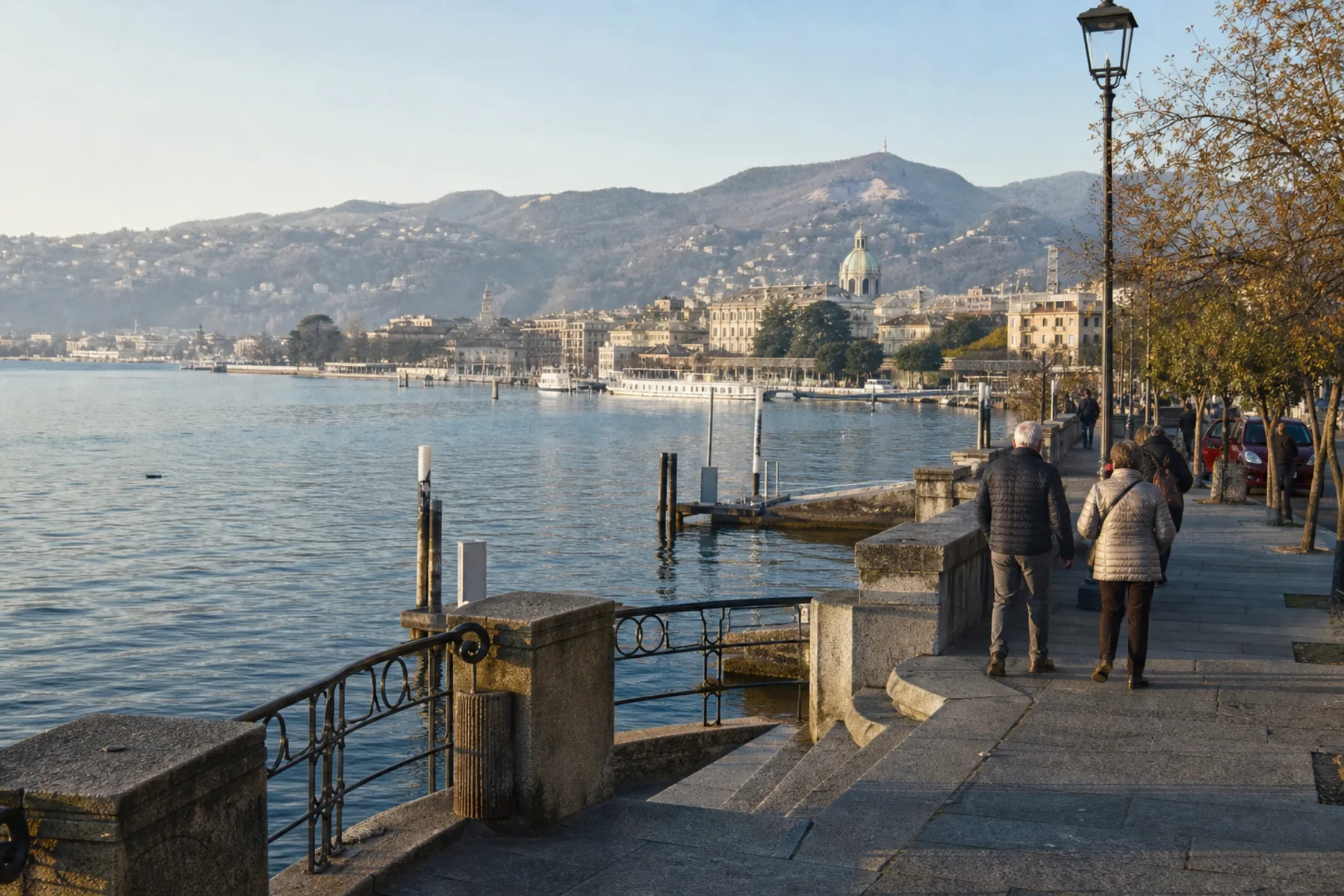
Como and the lower lake provide rail, hospitals and Milan access; farther-lake villages trade convenience for character. In the Dolomites, Bolzano and larger valley towns offer deeper services than resort or high-altitude villages.
Test the property in its hard season
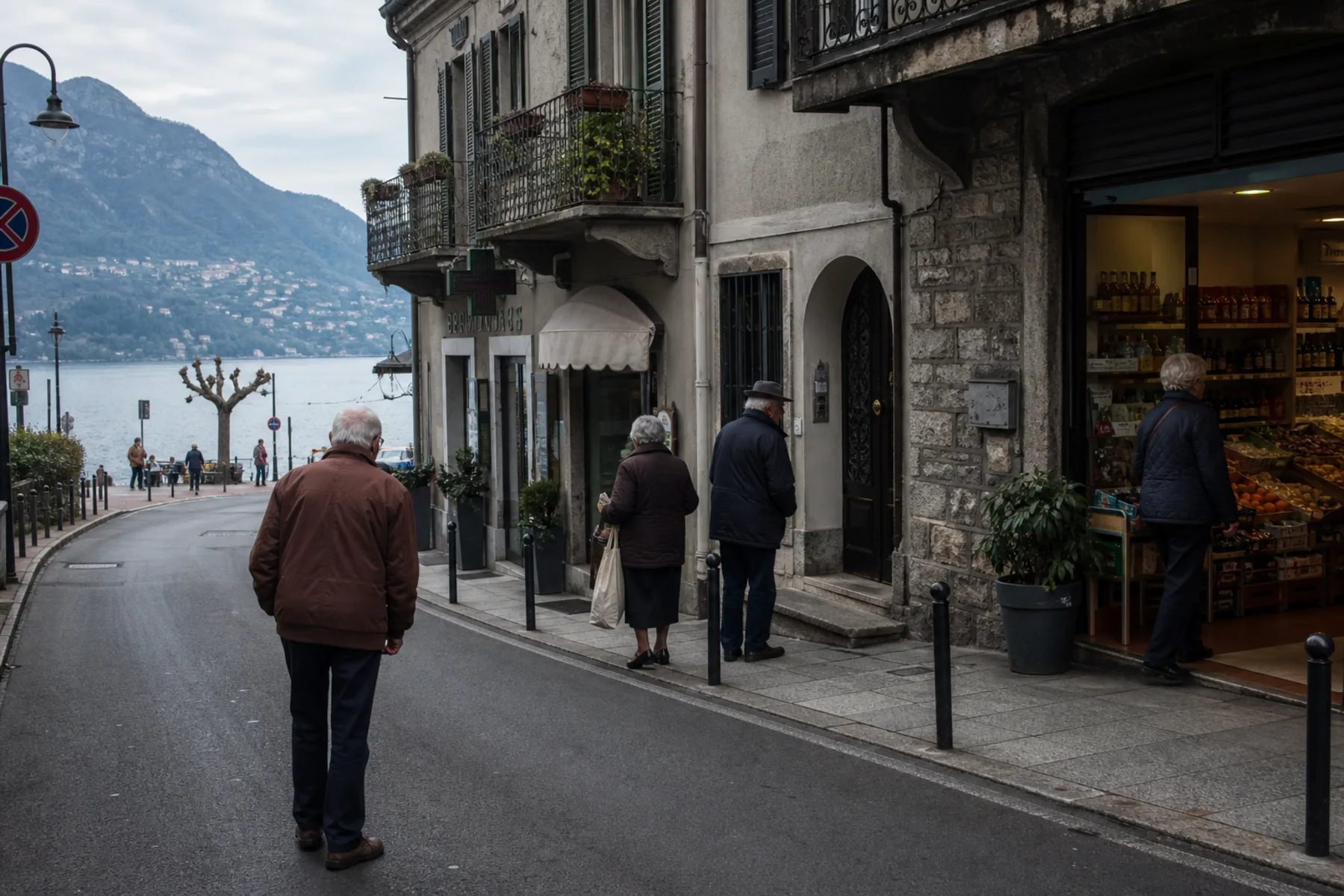
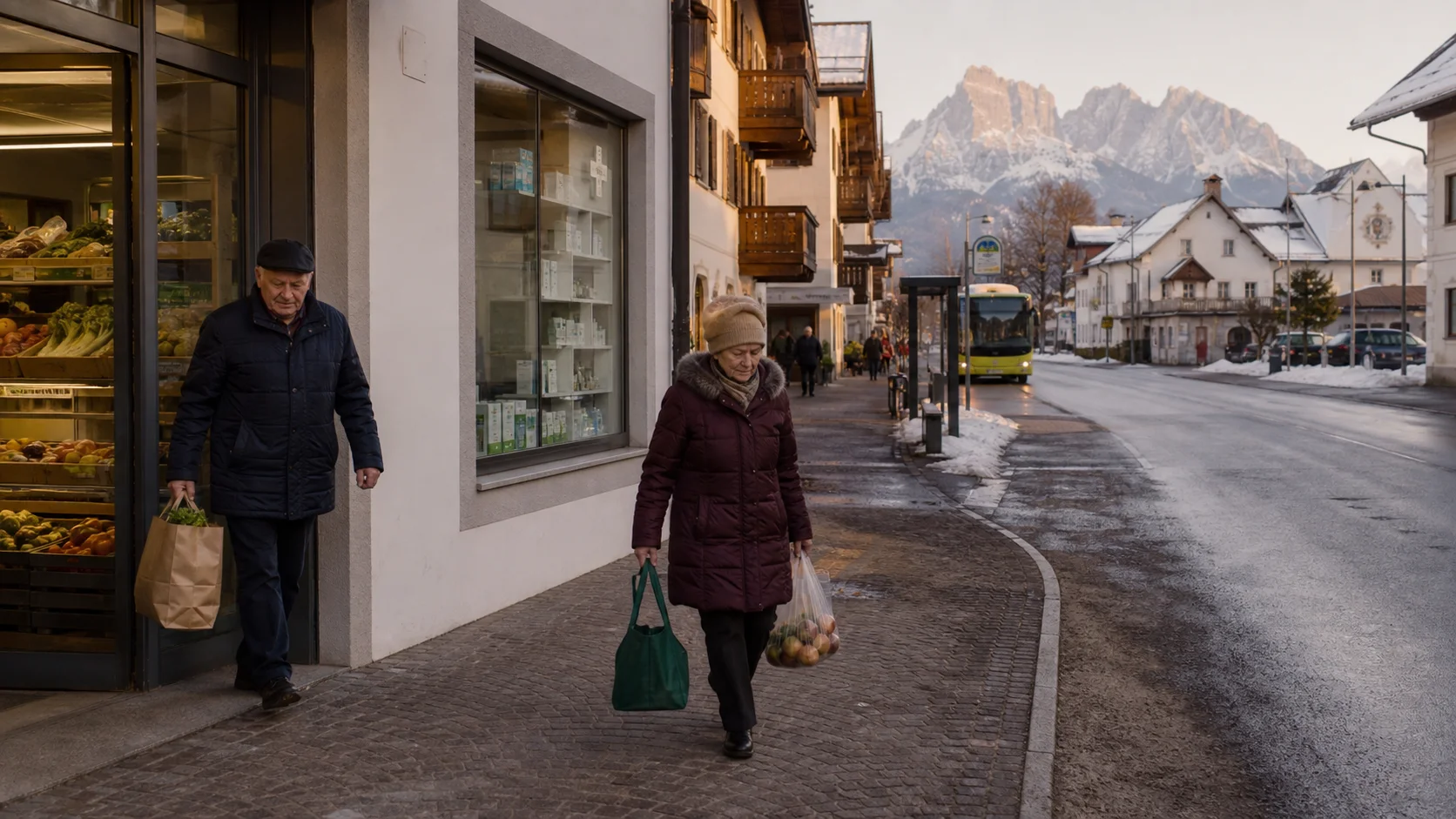
Visit a lake home during wet, quiet months and a mountain home during snow and shoulder season. Check light, damp, heating, access, parking, public transport and whether essential businesses remain open.
Prove conformity before renovation
Match title, cadastral plan and planning history, then price structure, energy work and approved condominium projects. A notarial closing does not make an unverified alteration inexpensive to regularise.
Keep rental income secondary
CIN is only one compliance layer. A retirement home should remain affordable under personal use or conventional longer letting, with tourist income treated only after written confirmation of national, regional, municipal and condominium permission.
Estimate your retirement capital
Start with destination expenses in today's money, then account for inflation, reliable pension and passive income, housing, property acquisition, and a liquid portfolio.
Open the retirement abroad calculatorLake Como and the Dolomites are not interchangeable
The lake offers stronger international access and metropolitan healthcare; South Tyrol offers a structured Alpine environment with more winter, hazard and provincial-rule exposure.
| Destination | Best for | Daily-life read | Primary diligence | Rental stance |
|---|---|---|---|---|
| Lake Como | Lake life with Milan access and a broad international buyer pool | Lower-lake and rail-served towns are easiest; remote shores add ferries, driving and seasonality | Title, planning, condominium, slope, flood, humidity, access and municipal rental rules | CIN plus Lombardy, municipal, planning and building permission |
| Dolomites / South Tyrol | Active Alpine retirement with disciplined winter planning | Bolzano and larger valleys offer the deepest year-round services | Provincial use rules, avalanche and landslide maps, snow access, roof, heating and insurance | CIN plus South Tyrol accommodation registration and local restrictions |
Related Buying Guides
Use these adjacent guides to test the same shortlist from a different buyer intent before committing to local diligence.
Best Places to Buy Property in Europe
Compare the best places to buy property in Europe for foreign buyers focused on lifestyle, retirement, rental resilience, value discipline, and resale liquidity.
Best Places to Buy Property Abroad for Retirement
Compare the best places to buy property abroad for retirement using ownership clarity, healthcare, lifestyle, value, rental resilience, and exit liquidity.
Buying Property Abroad for Retirement
A retirement-focused framework for buying property abroad, comparing ownership clarity, healthcare practicality, lifestyle fit, value, and resale flexibility.
Foreign Property Investment Risks
A practical risk framework for foreign property investment, covering title clarity, rental rules, currency exposure, liquidity, maintenance, and market concentration.
FAQ
Does buying property give a foreigner residency in Italy?
No. A deed does not create residence. Retirees may consider an elective-residence route where eligible, but it has separate income, accommodation and insurance requirements.
Can foreigners buy property in Italy?
EU buyers generally can. Some non-EU buyers depend on reciprocity or another legal basis, and every acquisition needs title, cadastral, planning and building-conformity checks.
How does healthcare work for foreign retirees in Italy?
Healthcare access follows lawful residence, registration and applicable EU or national rules. Ownership alone creates no entitlement.
Should retirement buyers compare Lake Como or the Dolomites?
Lake Como offers Milan access and an international buyer pool; the Dolomites and South Tyrol offer a mountain lifestyle with different language, winter-access, building and second-home constraints.
References and update policy
Residence, purchase tax, title and tourist-use rules come from different national and regional systems. Recheck the buyer, municipality and building with Italian legal, tax and technical advisers. This guide was substantively reviewed on 27 August 2026.
- EU: residence rights for pensioners
- Italian consulate: elective-residence visa requirements
- Italian Ministry: investor visa
- Foreign Ministry: reciprocity
- Revenue Agency: buying a home
- Ministry of Tourism: CIN and BDSR FAQs
- Italian Notariat: purchase document list
- Health Ministry: foreign residents and the SSN
- Lombardy: regional accommodation code
- South Tyrol: private accommodation rules
- South Tyrol: natural-hazard plans