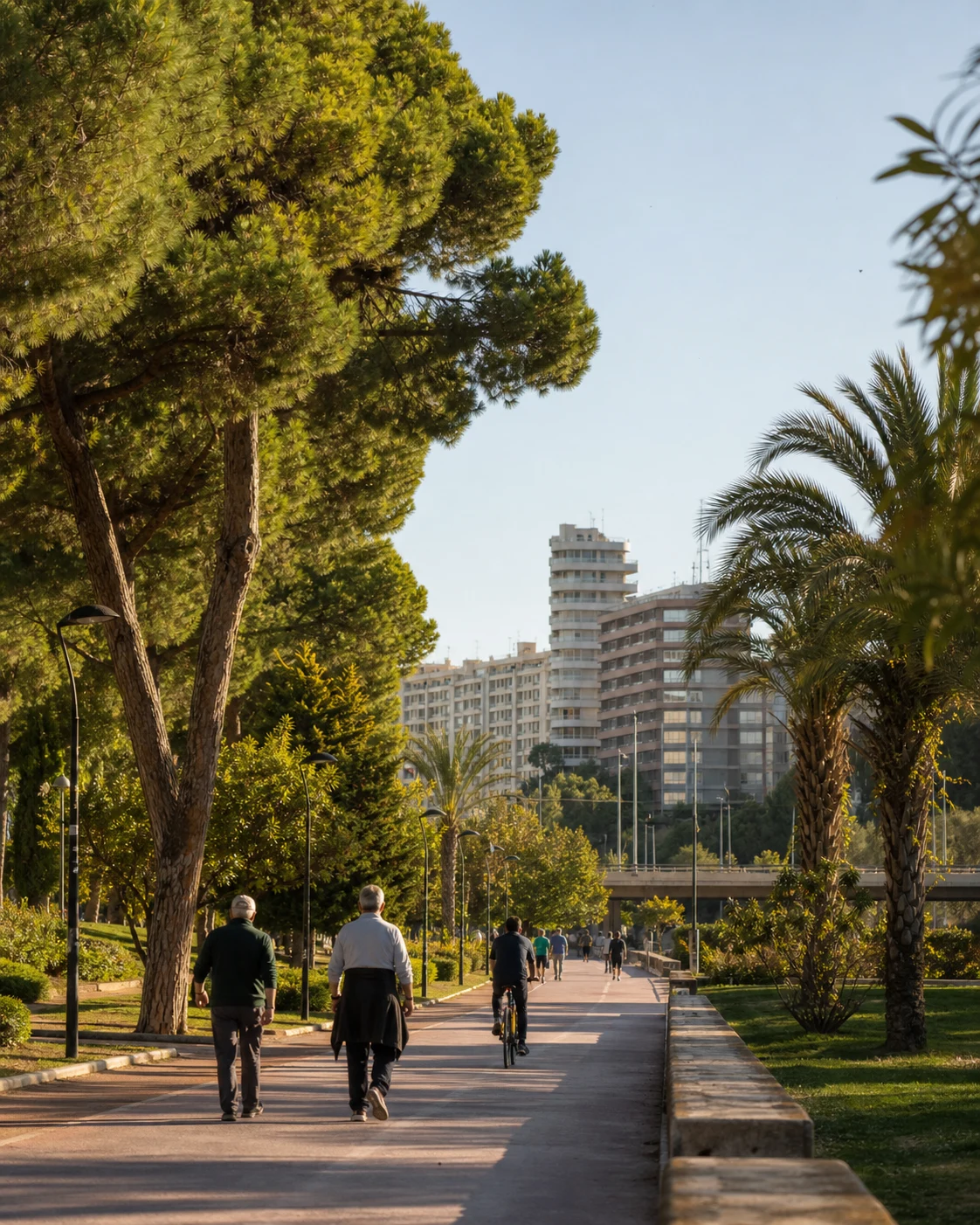
Start here
Buying property does not give you residency
Foreign buyers can generally acquire Spanish property, but a deed does not create a visa, residence authorization, permanent residence, public-healthcare entitlement or tax advantage. Spain's investor-residence route—including the former real-estate route—ended on 3 April 2025. Treat immigration and property as separate workstreams.
EU, EEA and Swiss citizens use free-movement rules and registration procedures. For many non-EU retirees, the relevant starting point is Spain's non-lucrative residence, which permits residence without work when the applicant meets the current financial, insurance and other requirements. It is not a property-owner visa, and individual circumstances, family composition and renewal plans matter.
Decision rule: do not reserve a retirement home until an immigration adviser has confirmed the route, documentary requirements, renewal conditions and whether each accompanying family member qualifies.
Who Spain suits
Spain is a strong fit for buyers who can establish an independent residence route, want a genuine year-round social and healthcare environment, accept region-by-region tax and rental rules, and value daily life more than maximum property yield.
Look elsewhere first if the purchase is expected to create residency, the financial case depends on unrestricted short-term letting, the buyer cannot tolerate summer heat or water constraints, or the plan requires simple tax treatment across several countries.
Before offering, confirm residence, tax residence, healthcare, financing, title, planning status, community rules, hazards, rental permission and exit demand—in that order. A home can be legally purchasable while the retirement plan around it remains unworkable.
What changed in 2025 and 2026
Property investment no longer creates a residence route
The end of Spain's investor visas is not a temporary pause. New buyers must qualify under a different immigration category. Do not rely on property advertising that still connects a purchase price to Spanish residence.
New tourist use may need community approval
For tourist activity beginning after 3 April 2025 in a building governed by the Horizontal Property Law, the owner should expect to prove express three-fifths approval from both owners and participation quotas, subject to the exact facts and transitional position. A January 2026 registry decision illustrates the rule and the narrow protection for activity already validly operating before the change. See the official BOE decision.
The national short-rental register changed again in 2026
Spain introduced a national registration procedure for short-duration accommodation under Royal Decree 1312/2024. The Supreme Court's judgment of 19 May 2026 annulled that national registration procedure and related references; the consolidated text now marks the affected articles as annulled. This does not deregulate holiday letting: regional and municipal rules remain, alongside planning, consumer and community-of-owners controls. Check the Supreme Court publication and the current consolidated decree immediately before underwriting rental income.
Financing and ownership costs
Foreign-buyer financing exists, but residence status, euro income, age, credit history, property type and lender policy determine the practical terms. Obtain a written credit decision before paying a deposit whose return depends on financing. Model currency exposure separately if pension or portfolio income is not in euros.
For tax, separate new from resale property and separate national rules from autonomous-community rates. The Tax Agency states that a new home purchased from a developer is generally subject to 10% VAT, while a used home is generally subject to transfer tax administered where the property is located. Add notary, registry, legal, valuation, mortgage, insurance, community, maintenance and eventual disposal costs; obtain a location- and buyer-specific closing statement rather than applying one national percentage.
Non-resident owners may owe Spanish tax on rent, gains and imputed income from urban property. When a buyer acquires Spanish property from a non-resident seller, the Tax Agency says the buyer generally must retain and pay 3% of the agreed consideration as a payment on account for the seller. Residence planning also changes the frame: a person may become Spanish tax resident by spending more than 183 days in Spain during the calendar year or by locating the main base of economic interests there.
Decision rule: compare five-year cash outlay after tax, financing, community fees and maintenance, then commission cross-border tax advice before deciding how many days to spend in Spain.
Retirement practicality beyond the purchase
Healthcare follows residence and entitlement
Property ownership does not itself open Spain's National Health System. Social Security guidance ties publicly funded entitlement to Spanish or qualifying foreign residence, social-security status, international coordination or another legal basis. Some economically inactive residents can use an S1, private insurance or a regional special agreement depending on their circumstances. Confirm the route before moving with the Spanish Social Security eligibility guidance and the relevant autonomous-community health service.
Flood, wildfire and heat diligence
Spain's retirement appeal is inseparable from climate. Screen river, flash-flood and coastal exposure on the national flood-zone mapping system, then check municipal plans, building access, drainage, previous losses and insurability. In wooded or peri-urban areas, inspect wildfire access and defensible space. For every location, test summer heat, shading, ventilation, water security and cooling costs rather than relying on an annual climate average.
Planning and community records matter
Obtain an up-to-date land-registry extract, compare it with the cadastre and physical property, confirm planning and occupancy status, and review community statutes, minutes, accounts, reserve position, works and litigation. Spain's registrars provide an English-language guide to buying property and translated registry information for international users.
Rental permission is asset-specific
A tourist-use registration in one region or municipality says little about another. Before assigning value to income, confirm the current autonomous-community regime, municipal zoning, building statutes, community approval, occupancy documentation, platform rules and whether any historic authorization transfers with the property. Underwrite the home first as a retirement asset; treat permitted rental as optionality.
Spain through five retirement lenses
Spain succeeds as a retirement base when the buyer chooses a real community rather than a holiday proposition. The same national framework produces very different outcomes across an inland Valencia neighborhood, a Costa del Sol apartment, a Girona townhouse and a Mallorcan village. These five questions connect the property to the life it must support.
Live well, year after year
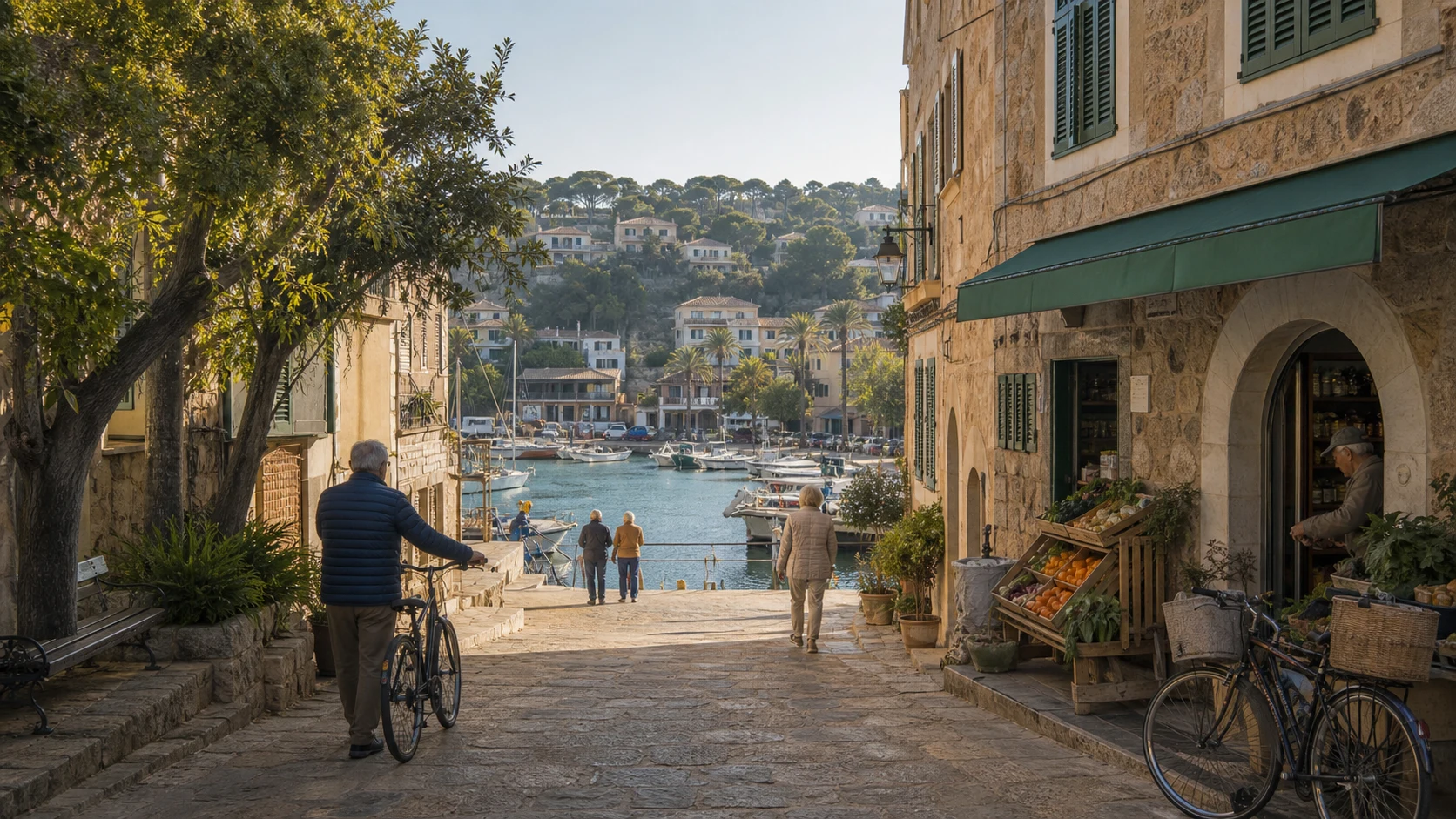
Valencia offers the most balanced version of urban Mediterranean retirement: a substantial city, beaches, culture and daily services without requiring a resort routine. Málaga and the Costa del Sol make entry socially easier through established international communities, but municipality and neighborhood selection determine whether life remains pleasant outside the visitor economy. Girona and the Costa Brava reward buyers seeking Catalan character and landscape, while Mallorca offers a polished island ecosystem at a higher price and with more logistical dependence.
Healthcare, shade, walkability, groceries, public transport and year-round social life matter more after the first month than a sea view. Test each location in its hottest period and in winter. A retirement home should remain comfortable when restaurants close, visitors leave, a car cannot be used and a specialist appointment is required.

Reach Spain easily—and choose the right rhythm
Spain has unusual depth for repeat international use. Málaga, Valencia and Palma support broad air networks, while high-speed rail strengthens the mainland city case. Access alone is not enough: model the full door-to-door journey, seasonal schedules, onward transport and whether friends or family can visit without a complex transfer.
Valencia is the easiest place in this shortlist to build an ordinary urban routine. Málaga and the Costa del Sol are strongest for internationally connected coastal living. Girona and the Costa Brava divide between a functioning second city and car-dependent coastal settlements. Mallorca's air access is extensive, but island life still concentrates maintenance, medical travel and family logistics into a different rhythm.
Own and operate with regional discipline
Spain's land-registry and notarial systems provide a recognizable ownership path, but a registry extract is not a substitute for full diligence. The buyer must reconcile title, cadastre, planning status, physical works, occupancy documentation, debts, community records and intended use. Coastal extensions, converted terraces, rural buildings and older planning histories deserve particular scrutiny.
Operation is regional and local. Transfer taxes differ by autonomous community; tourist-use rules can sit at regional, municipal and building levels; water, flood, wildfire and heat exposure vary by site. A buyer who cannot explain which authority controls each issue is not ready to price the asset.
Income and upside need a local story
Spain has a deep foreign-buyer market, but national demand does not make every home liquid. Registradores reported that foreign purchasers represented 13.8% of Spanish home sales in 2025, with especially high shares in the Balearic Islands and Valencia. That supports international depth; it does not validate a particular price or yield.
Valencia and Málaga have the broadest mix of local, national and international demand in this shortlist. Mallorca has a powerful international buyer pool but a high entry threshold and more policy sensitivity. Costa Brava and Girona range from globally recognized enclaves to thin, highly seasonal micro-markets. Underwrite long-term value from location quality and ordinary usability, not from a tourist licence whose status may change.
Preserve the exit—and the life around it
Exit quality begins at purchase. Favor understandable title, legal building status, manageable community costs, climate resilience and a layout that appeals beyond one nationality or rental strategy. Avoid paying a premium for informal alterations, assumed licences or a view that comes with difficult access and weak year-round services.
The retirement conclusion is conditional: choose Valencia for the strongest all-round urban base; Málaga and the Costa del Sol for established international infrastructure; Girona or the Costa Brava for a more selective Catalan life; and Mallorca when premium island living, travel dependence and carrying costs all fit comfortably. The best property is the one that remains useful even if short-term rental income disappears.
Estimate your retirement capital
Start with destination expenses in today's money, then account for inflation, reliable pension and passive income, housing, property acquisition, and a liquid portfolio.
Open the retirement abroad calculatorFour Spanish destinations to compare
Choose the retirement pattern before the property. Valencia offers the most balanced year-round city case; Málaga and the Costa del Sol offer the deepest international retirement infrastructure; Costa Brava and Girona suit a more selective Catalan rhythm; Mallorca is the premium island choice when carrying costs and logistics remain comfortable.
| Destination | Best for | Daily-life read | Primary diligence | Rental stance |
|---|---|---|---|---|
| Valencia | Balanced year-round city life with beach access and everyday services | The broadest retirement base in this shortlist | Neighborhood heat, flood exposure, community rules and local rental permissions | Prefer durable residential demand over a tourist-only income case |
| Málaga / Costa del Sol | International retirement infrastructure, flights and established coastal communities | Easy to enter socially, but the coast varies sharply by municipality | Planning history, water and heat exposure, community approval and municipal tourist-use rules | Underwrite building by building; do not assume an existing holiday listing can continue |
| Costa Brava / Girona | Catalan culture, landscape and a quieter second-city or coastal rhythm | Compelling for selective locations, more seasonal away from Girona | Winter services, car dependence, coastal planning, wildfire and flood exposure | Treat licensing and seasonality as constraints, not upside assumptions |
| Mallorca | Premium island living with a deep international buyer and service ecosystem | Highly usable where year-round services remain close | Entry price, water and heat resilience, legal building status, community rules and island logistics | Do not buy on a holiday-rental thesis until the exact asset and permissions are verified |
Related Buying Guides
Use these adjacent guides to test the same shortlist from a different buyer intent before committing to local diligence.
Portugal vs Spain Retirement Property
Compare Portugal and Spain retirement property markets across lifestyle, ownership clarity, value, healthcare practicality, rentals, and resale.
Best Countries to Buy Property as a Foreigner
Compare where foreigners can buy property with ownership clarity, title practicality, lifestyle quality, value discipline, and resale depth.
Buy Property Abroad
Use a structured framework to buy property abroad: shortlist countries, compare ownership risk, underwrite income, and plan exit liquidity.
Best Places to Buy Property in Europe
Compare the best places to buy property in Europe for foreign buyers focused on lifestyle, retirement, rental resilience, value discipline, and resale liquidity.
FAQ
Does buying property give a foreigner residency in Spain?
No. Property ownership and immigration status are separate. Spain ended residence permits linked to qualifying investment, including real estate, on 3 April 2025. A buyer needs an independent right or authorization to reside.
Can foreigners buy property in Spain?
Foreign buyers can generally acquire Spanish property, but the transaction, financing, taxes, land-registry position, community rules and intended rental use need property-specific review.
How does healthcare work for foreign retirees in Spain?
Eligibility depends on residence, social-security coordination and other legal routes, not on owning a home. Confirm the route before moving; some applicants must demonstrate private cover during the residence process.
Where should retirement buyers compare in Spain?
Start with Valencia for a balanced year-round city, Málaga and the Costa del Sol for international retirement infrastructure, Costa Brava and Girona for a more seasonal Catalan lifestyle, and Mallorca when island access and premium carrying costs are acceptable.
References and update policy
Legal and administrative claims in this guide use Spanish government, EU, tax-agency, Social Security, land-registry, airport and BOE sources. Spain divides important powers among the state, autonomous communities, municipalities and communities of owners. Recheck every linked source and the exact property's local position before signing. This guide was substantively reviewed on 21 August 2026.
- Ministry of Inclusion: initial non-lucrative temporary residence
- Government of Spain: investor residence ended on 3 April 2025
- Tax Agency: individual tax residence in Spain
- Tax Agency: taxation of property owned by non-residents
- Tax Agency: VAT or transfer tax when buying a home
- Tax Agency: purchaser withholding when the seller is non-resident
- Spanish Social Security: healthcare entitlement and requirements
- Ministry of Health: special healthcare agreement
- Registradores de España: guide to buying property in Spain
- Land Registry: extracts and information for international users
- Registradores de España: 2025 registered housing-market statistics
- BOE: community approval for new tourist-use activity
- BOE: Supreme Court judgment of 19 May 2026
- BOE: consolidated short-duration accommodation decree
- MITECO: national flood-zone mapping system
- Aena: Valencia Airport destinations
- Aena: Málaga–Costa del Sol Airport destinations
- Aena: Palma de Mallorca Airport destinations