Start here
Buying property does not give you residency
Thailand's retirement status and property law are separate. The standard Non-Immigrant O retirement route is for applicants age 50 or older and uses financial tests such as THB 800,000 in funds, THB 65,000 monthly income or a qualifying combination. O-A adds police, medical and insurance documents; the higher-threshold LTR wealthy-pensioner route has separate passive-income conditions.
See the official Non-Immigrant O retirement criteria. Renewable status brings its own reporting, re-entry, address-notification and arrival-card administration. It does not permit foreign ownership of Thai land.
Decision rule: choose the lawful stay route and annual compliance routine before treating a condominium or lease as a retirement base.
Who Thailand suits
Thailand is a strong fit for retirees who meet the financial and insurance requirements, are comfortable with immigration administration and private healthcare, and prefer a registered foreign-quota condominium or fully understood lease to an opaque villa structure.
Look elsewhere first if direct foreign freehold villa land is essential, a home is expected to create permanent residence, nominee shareholders are proposed, or nightly rental income must carry the investment.
What changed in 2025–2026
Thailand introduced the Digital Arrival Card from 1 May 2025, adding a free online filing to each entry. The 2025 LTR revisions broadened parts of that programme, but the wealthy-pensioner route remains a high-income category rather than a general retirement visa.
Tax administration for foreign income now includes a Revenue Department declaration and foreign-tax-credit workflow. A temporary 0.01% transfer and mortgage fee concession ended on 30 June 2026 and applied to qualifying Thai individual buyers; a foreign buyer should not model it. No official enacted source was found changing the statutory 49% foreign ownership ceiling for condominiums.
Financing and ownership costs
Foreign individuals generally cannot own Thai land. The clearest conventional route is a qualifying foreign-freehold condominium within the building quota, with traceable foreign-currency funding documentation. A building can sometimes be held separately from leased land, but a 30-year registered lease is not freehold and any future renewal is not a present guaranteed right. Thai nominee shareholders are not a lawful workaround. See the official foreign land and condominium summary.
Cash or overseas finance is the conservative assumption. The standard condominium transfer registration fee is 2% of official appraised value; seller withholding and either specific business tax or stamp duty can also affect settlement. A registered lease carries a 1% registration fee. Allocate each cost in the contract rather than assuming a single buyer percentage.
A person present in Thailand for at least 180 days in a tax year is treated as resident under current Revenue Department guidance. Foreign-source income earned from 2024 onward and later remitted can enter the Thai calculation; preserve source, remittance and foreign-tax evidence using the official foreign-tax-credit guidance.
Retirement practicality beyond the purchase
Private healthcare depth differs. Phuket has the larger stated private-hospital base and stronger mainland-linked contingency. Koh Samui offers capable private care but a smaller system where air or marine transfer planning matters more for complex chronic or high-acuity needs.
Verify the legal interest, not the marketing label. For a condominium, confirm registered status, unit title, foreign-quota capacity immediately before transfer, charges, juristic-person accounts, reserves, insurance, litigation and bylaws. For a villa project, separate the land lease, building ownership, management contract and rental programme.
Short stays need a hotel-law basis. The official Hotel Act excludes accommodation charged monthly or longer from its hotel definition; shorter paid stays need a lawful basis and must also satisfy project rules and local licensing.
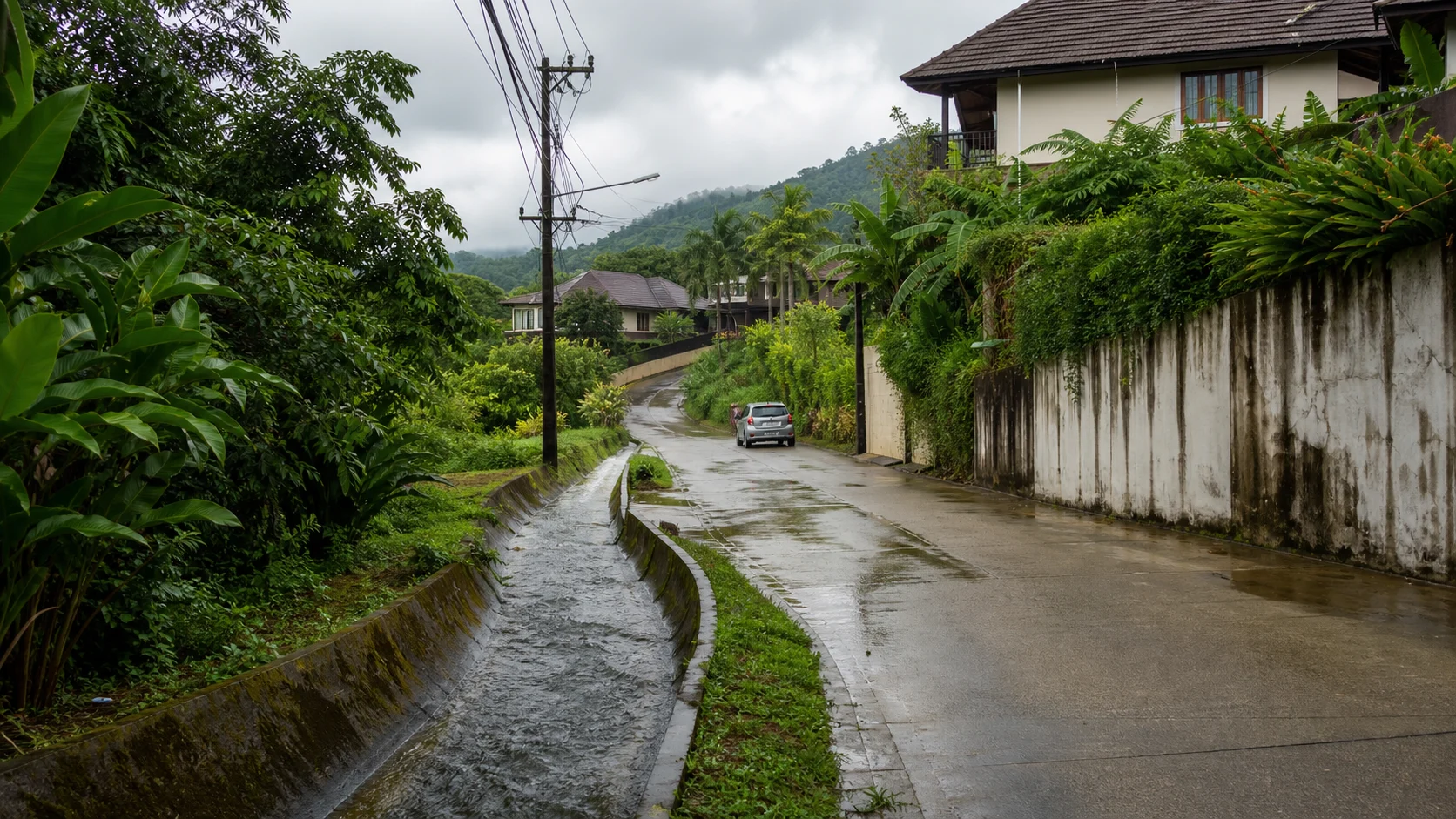
Monsoon and island infrastructure are asset risks. Phuket requires drainage, slope, tsunami-map and evacuation checks. Samui requires late-year rain, wind and wave, road, utility and medical-transfer resilience. Obtain written insurance cover and exclusions rather than assuming flood, landslide or business interruption is standard.
Thailand through five retirement lenses
Thailand can make daily life attractive at a lower entry price than many global resorts, but only when the residence, ownership and healthcare structures remain understandable without sales language.
Make the stay route renewable
Choose the retirement or long-stay category on its own merits, then calendar reporting, re-entry, insurance, address and arrival requirements. The property should remain workable if visa rules or personal circumstances change.
Choose a home you can legally control
A foreign-quota condominium is normally the cleanest ownership route. Land, building, lease and management rights must be read separately in a villa project. Reject nominee-company arrangements and price only the registered term and rights that exist today.
Match healthcare and climate to ageing
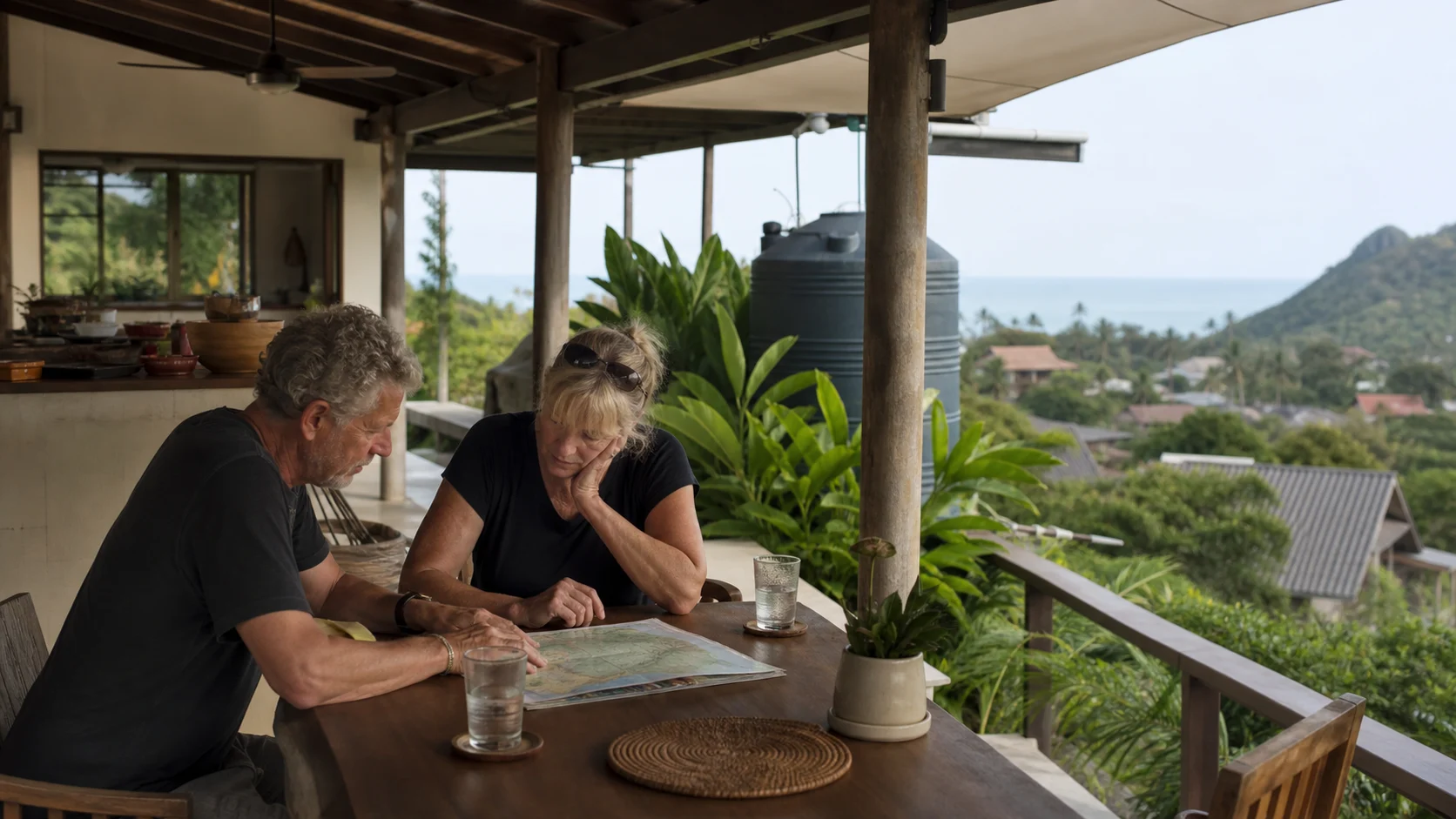
Phuket better suits buyers prioritising specialist depth and mainland-linked contingency. Samui rewards a smaller-island rhythm but places more weight on transfer cover, utilities and all-weather access. In both, assess the wet-season route from the home to hospital and airport.
Keep income optional
Neither Phuket nor Samui turns an ordinary condominium into a lawful hotel. Building rules, licences, management quality and tax all matter. Select a property that remains affordable and useful on monthly or personal-use assumptions, then treat lawful visitor income as optionality.
Protect the future sale
Favor registered rights, a functioning juristic person, transparent charges and a broad local and foreign buyer pool. A complex lease or management promise can narrow both lender appetite and the next buyer's willingness to proceed.
Estimate your retirement capital
Start with destination expenses in today's money, then account for inflation, reliable pension and passive income, housing, property acquisition, and a liquid portfolio.
Open the retirement abroad calculatorPhuket and Koh Samui to compare
Both use the same national ownership and immigration law, but healthcare depth, climate timing and island contingency make them different retirement propositions.
| Destination | Best for | Daily-life read | Primary diligence | Rental stance |
|---|---|---|---|---|
| Phuket / Koh Samui | Phuket for service depth; Koh Samui for a smaller island rhythm | Phuket has the larger hospital and transport network; Samui requires stronger transfer planning | Foreign quota or lease, project governance, monsoon drainage, slope, utilities and insurance | Short stays require a hotel-law basis, project permission and local compliance in either island |
Related Buying Guides
Use these adjacent guides to test the same shortlist from a different buyer intent before committing to local diligence.
Best Countries for Expats to Buy Property
Compare the best countries for expats to buy property by foreign-buyer practicality, ownership rules, lifestyle quality, value, and resale depth.
Foreign Property Investment Risks
A practical risk framework for foreign property investment, covering title clarity, rental rules, currency exposure, liquidity, maintenance, and market concentration.
Best Countries to Buy Property as a Foreigner
Compare where foreigners can buy property with ownership clarity, title practicality, lifestyle quality, value discipline, and resale depth.
Overseas Property Investment
Compare eight overseas property investment markets through buyer access, realistic net income, demand, carrying costs, regulation, entry price and exit liquidity.
FAQ
Does buying property give a foreigner residency in Thailand?
No. Property ownership and immigration status are separate; retirement and long-stay routes have their own age, financial, insurance and reporting conditions.
Can foreigners own property in Thailand?
Foreigners can own qualifying condominium units within the statutory foreign quota. Land, villas, leases and company structures require much more restrictive, structure-specific review.
How does healthcare work for foreign retirees in Thailand?
A home does not create public healthcare entitlement. Most international retirees plan around private insurance and access to suitable private hospitals, subject to visa and policy conditions.
Should retirement buyers choose Phuket or Koh Samui?
Phuket has the deeper service, hospital and flight network; Koh Samui offers a smaller island rhythm with greater dependence on local infrastructure and air or ferry logistics.
References and update policy
Immigration, ownership, tax and hotel-law claims use Thai government or official-hosted sources. Project, provincial and local permissions remain property-specific. Recheck every linked source and registered right before signing. This guide was substantively reviewed on 27 August 2026.
- Thai Consulate: Non-Immigrant O retirement
- BOI: LTR programme
- Immigration Bureau: Digital Arrival Card
- BOI/OSOS: foreign land and condominium ownership
- Land Department: condominium ownership rules
- Land Department: fees, taxes and duties
- Revenue Department: foreign-tax-credit guidance
- Department of Provincial Administration: Hotel Act
- Thai Meteorological Department: Thailand climate
- DDPM: tsunami inundation mapping